A fence can look excellent on installation day and still become a source of weekend work if the material does not fit the household. When comparing vinyl versus wood fence maintenance, the real question is not simply which fence is easier to clean. It is how much time, repair attention, and ongoing expense you want to plan for while protecting privacy, containing pets, or making the yard more usable.
For homeowners in Lynchburg and throughout Central Virginia, weather matters. Humid summers, rain, changing temperatures, sun exposure, and occasional winter storms all affect a fence over time. Both vinyl and wood can be strong, attractive residential choices when installed correctly. Their maintenance needs are simply very different.
Vinyl Versus Wood Fence Maintenance at a Glance
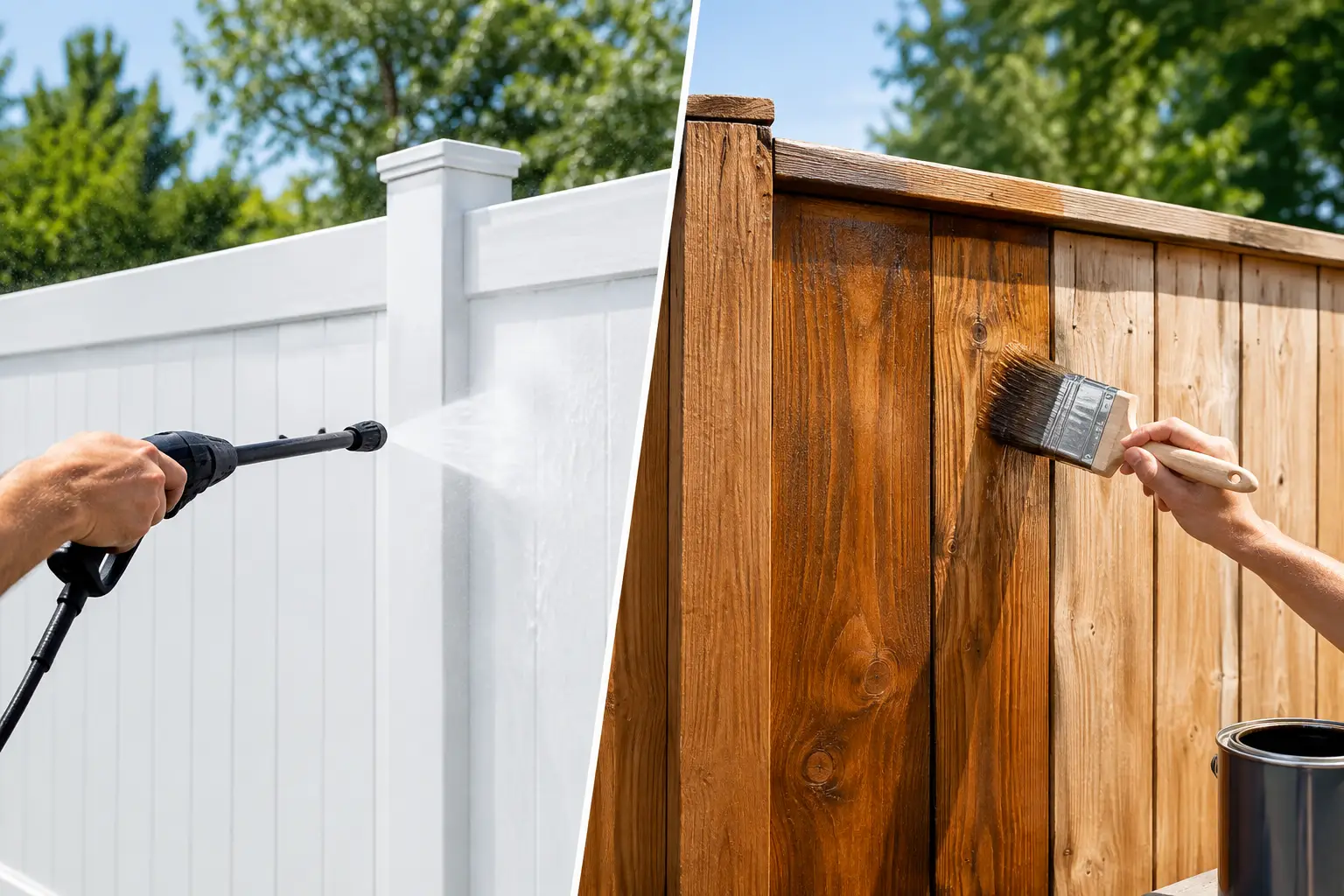
Vinyl is generally the lower-maintenance option. It does not need staining, painting, or sealing, and it will not rot, splinter, or attract termites. Most routine care involves rinsing away dirt and treating mildew or surface stains as needed. For a homeowner who wants a clean privacy fence with minimal seasonal work, vinyl is often an appealing fit.
Wood requires more hands-on care, but it offers a natural appearance that many homeowners prefer. A wood privacy fence usually needs periodic staining or sealing to help it stand up to moisture and sun. Individual boards can warp, crack, loosen, or rot over time, especially in shaded or damp areas. The benefit is that many wood fence repairs can be made one board or picket at a time instead of replacing an entire section.
Maintenance should not be the only deciding factor. Upfront cost, desired style, property conditions, privacy goals, and how long you expect to stay in the home all deserve consideration.
Routine Cleaning and Seasonal Care
Keeping a Vinyl Fence Clean
Vinyl fencing is not maintenance-free, but its regular care is straightforward. Pollen, grass clippings, dust, mud, and sprinkler residue can collect on the surface. In Central Virginia, shaded areas may also develop mildew or algae, particularly near trees, gardens, or poorly drained parts of the yard.
For most homes, a garden hose and a soft brush are enough for routine cleaning. Mild soap and water can remove many common marks. A vinyl-safe cleaner may help with stubborn grime, but abrasive pads, harsh solvents, and aggressive pressure washing can damage the finish or leave scratches. Check the fence once or twice each year for loose caps, shifted posts, cracked rails, and gate hardware that needs adjustment.
A vinyl fence does not need a protective finish. That eliminates a recurring project and makes it easier to maintain a consistent color from year to year. Still, white vinyl can show dirt more readily than darker materials, so visible areas near driveways, play spaces, and mowing paths may need occasional attention.
Caring for a Wood Fence
Wood needs a more deliberate maintenance schedule. At least once a year, look closely for loose nails or screws, damaged pickets, leaning posts, splitting rails, insect activity, and areas where the wood remains damp. Pay special attention to the bottom of the fence, where soil, mulch, leaves, and standing water can hold moisture against the boards.
Cleaning a wood fence removes dirt, mildew, and organic buildup that can shorten the life of the finish. A gentle wash is usually safer than high-pressure cleaning, which can gouge the wood fibers if used incorrectly. After the fence is clean and dry, a quality stain or water-repellent sealer helps protect it from moisture and sun exposure.
The timing depends on the wood species, finish, sun exposure, and weather conditions. A sunny fence may need renewed protection sooner than a fence with more shade, although shade can create its own moisture and mildew concerns. Many homeowners plan to stain or seal wood every two to three years, but the fence itself should guide the schedule. If water no longer beads on the surface or the color has faded significantly, it is time to inspect the finish.
Weather, Moisture, and Material Movement
Virginia weather asks different things of each material. Wood naturally expands and contracts as humidity changes. Over time, that movement can lead to small gaps, warped pickets, popped fasteners, and minor cracking. These changes are normal, but early repairs keep them from becoming larger problems.
Wood is also vulnerable to rot if it stays wet for long periods. Proper installation makes a major difference. Posts must be set securely, boards should have appropriate clearance from the ground, and drainage around the fence line should not trap water. Shrubs and vines should be trimmed back so air can move around the fence and moisture does not linger.
Vinyl does not absorb water, so rot is not a concern. It can, however, expand and contract with temperature changes. A properly installed vinyl system accounts for this movement. Panels, rails, and posts need to be assembled with the right spacing and support so the fence can move naturally without buckling or pulling apart.
Strong winds affect both materials. A solid privacy fence catches more wind than an open-style fence, regardless of whether it is wood or vinyl. Secure posts, appropriate depth, and quality installation matter as much as the material when your fence needs to remain stable through storms.
Repairs: What Homeowners Can Expect
Wood fences are often easier to repair in small areas. A broken picket, loose rail, or damaged board can frequently be replaced without disturbing the rest of the fence. Matching the color of an older stained fence can take some effort, but the repair itself is usually manageable. Posts are a bigger concern, since a leaning or rotted post can affect the alignment and strength of multiple sections.
Vinyl fence repairs can be less frequent, but they are not always as simple. A cracked picket or damaged rail may require a compatible replacement part from the original fence system. Color matching can also be difficult if an older fence has weathered or if the original product is no longer available. If a post or rail has been damaged, removing and reinstalling connected components may be necessary.
Gates deserve regular attention with either material. A gate that starts dragging, sagging, or refusing to latch should be corrected promptly. Waiting can strain hinges, posts, and panels. This is especially important for homeowners using a fenced yard for dogs or young children, where a dependable latch and secure closure are part of everyday safety.
Long-Term Cost Is More Than the Installation Price
Vinyl commonly costs more at the time of installation, but it usually requires fewer ongoing products and less labor afterward. Homeowners who do not want to budget for stain, sealer, paint, or frequent board replacement may find that trade-off worthwhile. Vinyl also maintains a uniform appearance with relatively little effort when it is cleaned regularly.
Wood can have a lower initial cost and offers flexibility in height, style, and repairs. Its long-term cost depends heavily on maintenance. A neglected wood fence may need significant repairs sooner, while a well-installed fence that is cleaned, sealed, and repaired promptly can provide many years of service.
There is no universal winner on cost. If you enjoy maintaining your property and value the warmth of real wood, routine upkeep may feel worthwhile. If free weekends and predictable care are the priority, vinyl may be the better fit. The condition of the yard also matters. A heavily shaded, damp property may demand more attention from either material than an open, well-drained lot.
Choosing the Right Fence for Your Yard
Choose vinyl when low routine maintenance, a consistent finished appearance, and no staining or sealing are high priorities. It works well for homeowners who want privacy fencing that can be rinsed clean and inspected periodically without adding a major seasonal project.
Choose wood when you prefer a classic natural look, want flexibility in design, or value the ability to repair individual components. Wood can be an excellent privacy fence for a Central Virginia home, provided you are prepared to protect it from moisture and sun over time.
Installation quality is central to both options. Even a low-maintenance vinyl fence can have problems if posts are not set correctly or gates are not aligned. Even premium wood will wear prematurely if boards sit in wet soil or the fence is never sealed. A free on-site estimate from Liberty Fence LLC can help you weigh material options against your yard layout, drainage, privacy needs, and budget.
The best fence is the one you will be comfortable owning after the installation crew leaves. Think about the view from your patio, the time you have for seasonal care, and what your family needs the yard to do every day. That practical answer usually points clearly toward the right material.