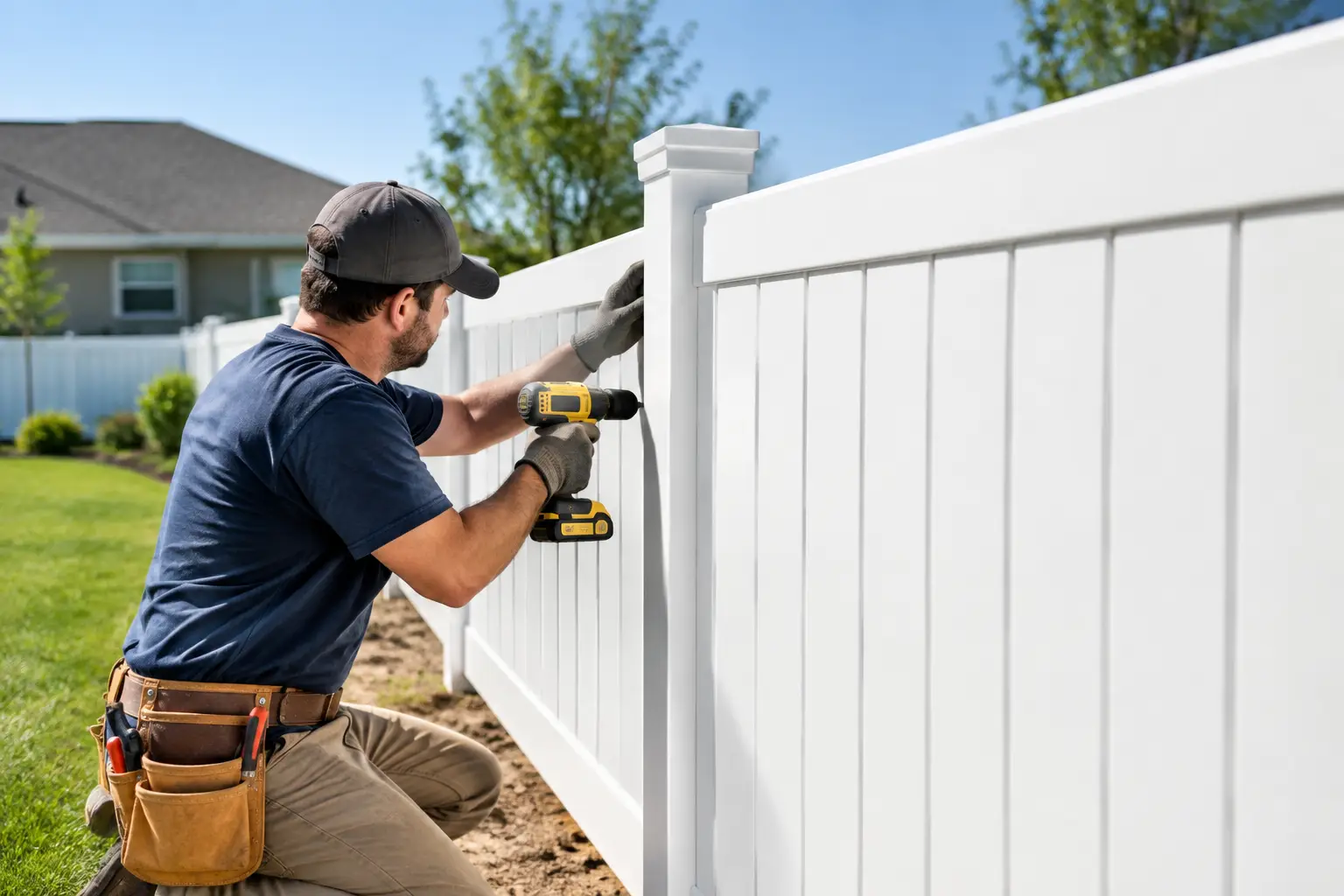
A vinyl fence can give a Lynchburg yard privacy, a safer place for children or pets, and a clean finished look without the routine painting and staining wood requires. But vinyl fence installation cost is not one fixed number. The total depends on the amount of fencing, the style you choose, the condition of the property, and the details needed to make the fence work for your household.
For many Central Virginia homeowners, an installed vinyl fence is a higher upfront investment than chain link or a basic wood fence. The trade-off is a durable, low-maintenance fence system that can hold its appearance for years when it is properly selected and installed. A free on-site estimate is the best way to turn a rough budget into a real project plan.
What Does Vinyl Fence Installation Cost in Lynchburg?
Vinyl fence installation is commonly priced by the linear foot, with the final figure reflecting both materials and labor. A simple open-picket vinyl fence on level ground will generally cost less per foot than a tall privacy fence with several gates, stepped sections, or challenging terrain. Homeowners planning a project often see installed ranges of roughly $25 to $55 or more per linear foot, depending on fence style and site conditions.
That range is useful for early planning, not as a substitute for a property-specific quote. A 100-foot backyard enclosure and a 250-foot fence that wraps a sloped lot have very different labor, material, and layout requirements. The best estimate starts by measuring the proposed fence line and discussing how the yard needs to function.
The Main Factors That Affect Your Price
Fence height and style
Height is one of the biggest cost drivers. A 4-foot vinyl picket fence uses less material and typically requires less structural support than a 6-foot privacy fence. Privacy panels also need stronger posts, rails, and footings to create a stable, consistent enclosure.
Style matters as well. Solid white privacy fencing is a popular choice for backyards because it blocks views and defines outdoor living space. Decorative top rails, lattice accents, alternating panel designs, and darker color options can increase material costs. These upgrades may be worthwhile when the fence is visible from the street or needs to complement the home's exterior, but they should be selected with the overall budget in mind.
Total linear footage
More fence naturally means more posts, panels, concrete, hardware, and installation time. However, price is not always a simple multiplication problem. Smaller projects can carry a higher cost per foot because mobilizing a crew, setting up the job, and ordering materials still involve fixed costs.
A clear property layout helps prevent surprises. Homeowners should consider the full area they want enclosed, not only the section that feels most urgent. Installing a fence in phases can make sense for some budgets, but it is smart to plan gate locations, fence transitions, and future tie-in points from the beginning.
Gates and access points
Every gate adds cost because it requires posts, hinges, latches, framing, and careful alignment. A standard walk gate is usually straightforward. Wider gates for lawn equipment, vehicles, or a driveway require heavier hardware and more support to operate properly over time.
Think about how you use the yard before settling on a gate plan. A rear gate may simplify mowing or trash access. A side gate can make it easier to move furniture or garden supplies. For pet containment, the location and latch style deserve as much attention as the fence panels themselves.
Slope, soil, and obstacles
Lynchburg-area properties can have slopes, uneven grades, wooded edges, and rocky soil. These conditions can affect both the appearance and the installation process. A fence may need to follow the slope in stepped sections or be built to track the grade, depending on the selected system and the desired look.
Creeks, retaining walls, mature tree roots, existing landscaping, old fence footings, and difficult equipment access can also add labor. None of these conditions automatically prevents a vinyl fence installation. They simply need to be evaluated before materials are ordered and work begins.
Removal of an existing fence
Replacing an old fence is often more involved than starting with an open yard. Existing wood posts may be set in large concrete footings. Chain-link fencing may have embedded terminal posts. Disposal, demolition, and site cleanup are separate parts of the job that should be included clearly in the estimate.
In some cases, an old fence can be removed quickly. In others, the condition of the posts, the amount of concrete, and access to the work area increase the time required. Asking about removal early helps create a more realistic vinyl fence budget.
Material Quality and Installation Both Matter
Not all vinyl fence products are built the same way. Panel thickness, internal reinforcement, rail construction, post design, and hardware quality all affect how a fence performs. A lower initial material price may be appealing, but a fence that sags, shifts, or develops gate problems can become expensive and frustrating later.
Professional installation protects the value of the material. Posts need correct spacing, depth, alignment, and concrete support. Panels must be set level or stepped thoughtfully across changing grades. Gates need to be square and properly supported so they latch reliably. These details are especially important for privacy fences, where even small alignment issues are easy to see across a long run.
A dependable contractor should explain what fence system is being proposed, where gates will go, how the fence will handle slopes, and what is included in the stated price. That clarity makes it easier to compare estimates fairly.
Property Details to Check Before Requesting an Estimate
Before installation, homeowners should have a general understanding of their property lines and neighborhood requirements. A fence contractor can help identify practical placement concerns, but only a survey or reliable property documentation can confirm a boundary. Installing a fence on the wrong side of a line can create a costly problem with a neighbor.
Homeowners associations may have rules for fence height, color, style, or placement. Local permit requirements can also apply depending on the property and project. If the fence will surround a pool, safety codes and gate requirements may be more specific. Utility lines must be located before post holes are dug.
It also helps to decide the fence's main job. A family seeking backyard privacy may prioritize height and solid panels. A dog owner may need secure gates and a layout with no easy escape points. A homeowner improving curb appeal may prefer a picket or semi-private design at the front or side of the property. The right fence is not always the least expensive option, but it should solve the problem it was built to address.
How to Keep a Vinyl Fence Project Within Budget
Start by separating must-haves from nice-to-haves. If privacy is the primary goal, invest first in the correct height, a solid fence style, and well-placed gates. Decorative accents can be added when they support the look you want and fit the budget.
A simple, efficient layout often saves money. Limiting unnecessary turns, selecting practical gate widths, and avoiding last-minute changes after materials are ordered can keep the project on track. That does not mean cutting corners on posts or installation. Structural components are where a fence earns its long service life.
It is also worth comparing the long-term maintenance picture. Vinyl does not need regular painting, staining, or sealing. It can usually be cleaned with mild soap, water, and a soft brush when dirt or mildew appears. Wood may have a lower starting price in some cases, but its future maintenance needs should be part of the decision.
Get a Site-Specific Vinyl Fence Estimate
An online price range can help with early planning, but the most accurate vinyl fence installation cost comes from seeing the yard. A professional on-site visit can account for measurements, grade changes, existing fencing, access, gate needs, and the style that fits your home.
Liberty Fence LLC provides free on-site estimates for residential fencing in Lynchburg and Central Virginia. Bring your questions about privacy, pets, safety, or replacing an aging fence. A well-planned vinyl fence should fit the property, the household, and the budget without leaving important details to guesswork.