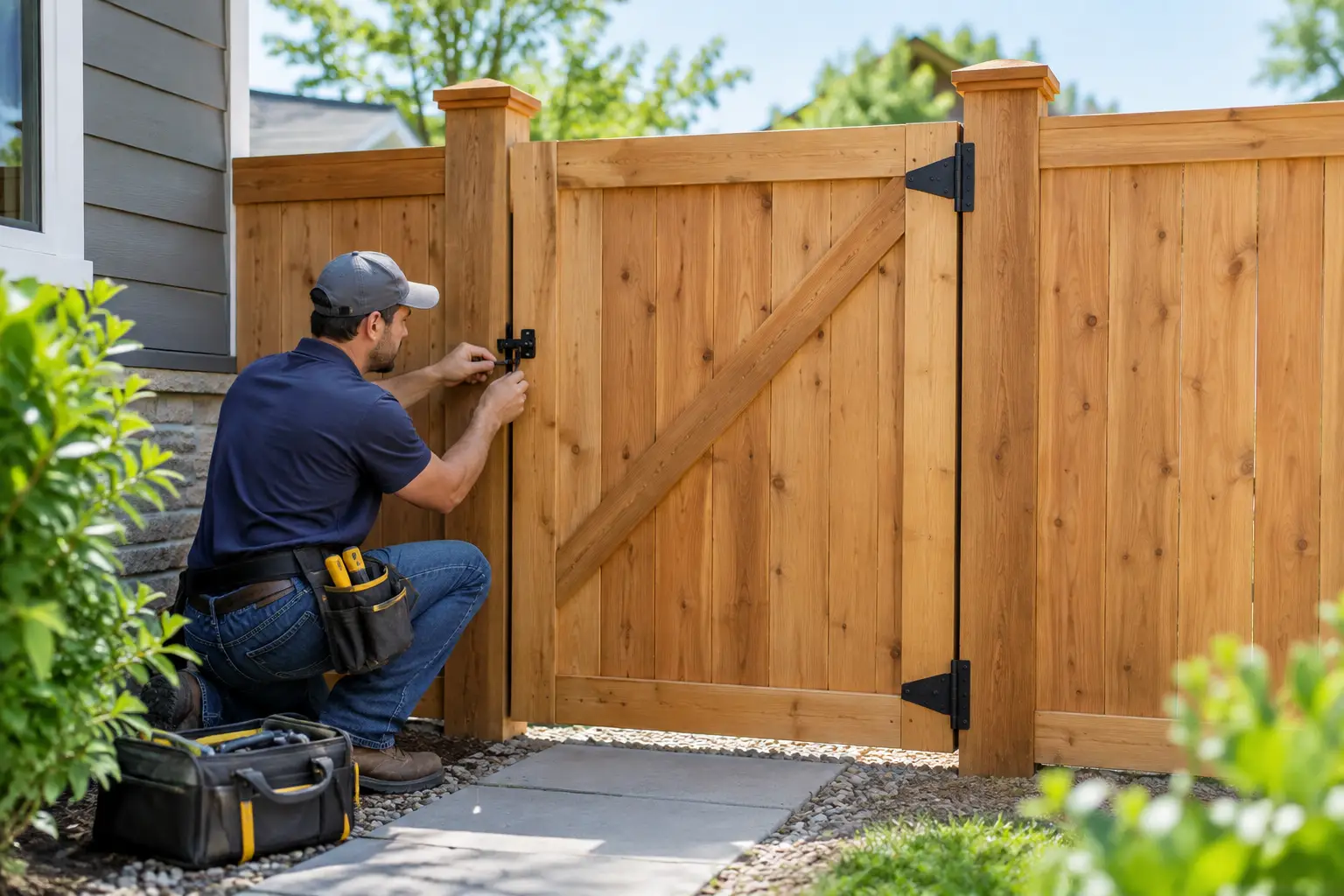
A gate is the part of a privacy fence you use every day. It needs to open easily when your hands are full, close securely behind children or pets, and stay aligned through Central Virginia rain, heat, and changing ground conditions. A well-planned privacy fence gate installation turns a fenced yard into a practical outdoor space instead of creating a weak point in the fence line.
For Lynchburg homeowners, gate placement and construction deserve the same attention as the fence itself. The right gate can make trash pickup, lawn care, entertaining, pet access, and backyard projects easier. The wrong one can sag, drag across the ground, or leave a gap where a dog can slip out.
Start With How You Will Use the Gate
Before choosing a gate width or latch, think through the daily route around your property. A side-yard gate used mainly for walking may only need a standard single gate. A gate leading to a backyard where equipment, furniture, or a riding mower needs to pass through may require a wider opening or a double gate.
Location matters just as much. A gate near the driveway can provide convenient access without requiring people to walk through the house. A gate placed too close to a slope, retaining wall, large tree, or utility equipment can be difficult to operate and maintain. On a smaller lot, a gate that swings inward may take up valuable yard space, while an outward-swinging gate may conflict with a walkway or driveway.
A professional on-site review helps identify these issues before posts are set. It also gives homeowners a chance to discuss which access points are truly needed. Adding a gate later is possible, but planning it with the original fence often produces a cleaner, more durable result.
Choose the Right Gate Size
Most residential privacy fence gates are built as single walk gates or double driveway gates. The best choice depends on access needs, not simply on what looks balanced from the street.
A standard walk gate is typically appropriate for foot traffic, pets, garden tools, and a push mower. It keeps the opening manageable and limits the weight carried by the hinges and posts. Wider single gates can work in certain situations, but as width increases, proper bracing and stronger support become more critical.
Double gates are useful when homeowners need occasional wide access for trailers, large lawn equipment, pool materials, or backyard construction work. They create a broad opening without making one gate leaf excessively heavy. The trade-off is that double gates require more hardware, a secure center connection, and careful attention to grade so both sides close properly.
Do not size a gate around a one-time project unless that access will remain useful. For example, it may be more practical to coordinate a temporary opening during a major backyard project than to install a large double gate that will rarely be used. A contractor can help weigh convenience against cost, appearance, and long-term maintenance.
Posts and Bracing Keep a Gate From Sagging
A sagging gate is rarely just a hinge problem. In many cases, the support posts were not set deeply enough, the gate frame lacks proper bracing, or the opening was not built to account for the gate's weight.
Gate posts carry more stress than ordinary line posts. Each time the gate swings, its weight pulls against the hinge-side post. That is why gate posts need secure installation, appropriate depth, and material suited to the fence system. The latch-side post must also remain stable so the gate continues to meet the latch correctly.
For wood privacy fences, a diagonal brace is a key part of gate construction. It transfers weight back toward the hinge side and helps keep the frame square. The direction of the brace matters. A properly built wood gate should support its own weight rather than relying on the fence panels beside it.
Vinyl privacy gates need their own structural planning. Vinyl offers a clean, low-maintenance appearance, but the gate frame often needs reinforcement to prevent movement and sagging. The same principle applies: the gate system should be designed to carry its weight without distorting the surrounding fence.
Account for Grade Before Privacy Fence Gate Installation
Many Central Virginia yards are not perfectly level. A small change in grade can determine whether a gate has enough clearance to swing freely or leaves an unwanted gap below the fence.
If the ground rises in the direction of the gate swing, the bottom of the gate may drag unless the opening is planned carefully. Raising the gate can solve the clearance problem, but it may create a gap large enough for a small pet to get through. In other situations, the gate and fence line may need to follow the slope, or the swing direction may need to change.
There is no single answer for every property. A gate that works well on a level lot may not work on a sloped backyard. The goal is to balance smooth operation, privacy, pet containment, and the finished appearance of the fence.
Drainage also deserves attention. Water that regularly flows under a gate can wash away soil, create mud, and affect how the gate clears the ground. Addressing the grade and drainage conditions during planning can prevent repeated adjustments later.
Select Hardware for Security and Everyday Use
Gate hardware should match how the gate will be used. A basic latch may be enough for a quiet side-yard gate, while a self-closing, self-latching setup may be a better fit near a pool area or where children need added protection.
Consider who will use the gate most often. A latch should be easy for adults to operate but secure enough to discourage unintended access. For pet owners, a dependable latch is especially important. Even a well-built fence cannot contain a dog if the gate is left unlatched or does not catch consistently.
Hinges should be selected for the size and weight of the gate. Heavy gates may need stronger hardware and more substantial framing. If security is a priority, homeowners may also want a lockable latch or gate hardware positioned on the inside of the yard. The best choice depends on the layout of the property and whether the gate is visible or accessible from the street.
Match the Gate to the Fence Material
The gate should look like part of the fence, not an afterthought. A wood privacy fence can use a board-on-board, stockade, shadowbox, or custom gate design that matches the surrounding panels. Wood offers flexibility in style and repair, though it needs periodic maintenance to protect its appearance and service life.
Vinyl privacy fencing provides a consistent look and requires less routine upkeep. Its gate components should be compatible with the specific vinyl system so spacing, reinforcement, and hardware all work together.
Chain-link and aluminum fencing are often selected for visibility, security, or pool-area applications rather than full privacy. Their gates require different hardware and framing, but the same questions still apply: where should people enter, how wide should the opening be, and what level of security is needed?
For a privacy fence, consistency matters. Matching the gate height, board pattern, color, and trim details helps the finished fence look intentional from both the yard and the street.
Know When Repair Is Enough
Not every gate problem requires replacement. A loose hinge, worn latch, minor settling issue, or damaged board may be repairable. Timely repair can prevent a small issue from becoming a failed post or a fully sagging gate.
Replacement is often the better option when the gate frame is rotted, the posts are leaning, the opening is no longer square, or the gate has been repeatedly adjusted without lasting results. If an existing gate never provided enough clearance or access, replacement also creates an opportunity to correct the original design.
A free on-site estimate gives homeowners a practical way to evaluate those options. Liberty Fence LLC can assess the fence condition, yard layout, gate use, and preferred material before recommending a repair or a new installation.
A gate should make your yard easier to use every time you pass through it. Planning for the right location, width, support, hardware, and ground conditions helps ensure it continues to do that long after the fence is installed.