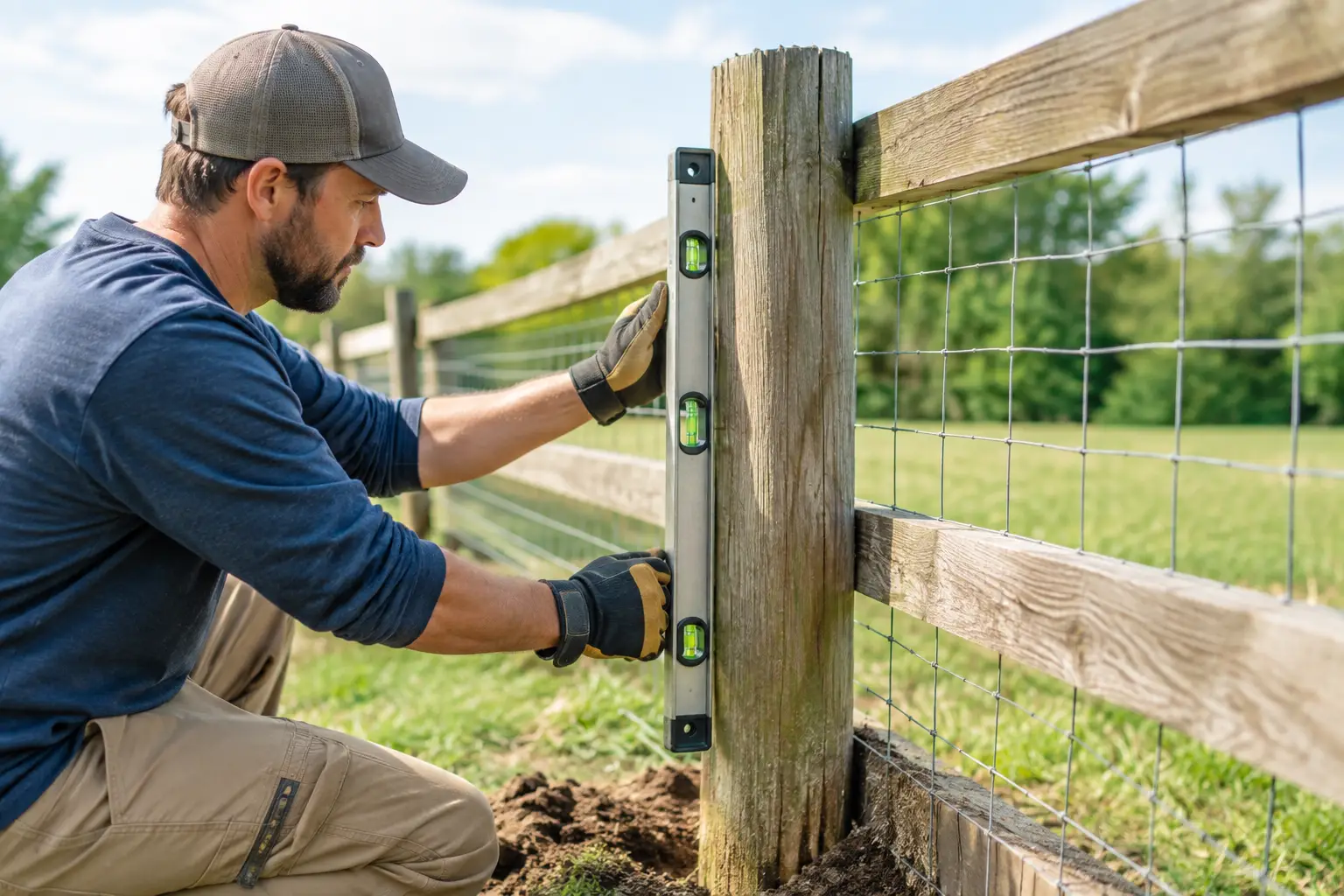
A fence rarely starts leaning all at once. You may first notice a gate that drags, a privacy panel that no longer lines up, or a post that shifts when you push on it. Knowing how to repair leaning fence posts can help prevent a small alignment issue from becoming a fallen section, a damaged gate, or an unsafe enclosure for children and pets.
For homeowners in Lynchburg and across Central Virginia, the right repair depends on why the post moved in the first place. Heavy rain, poor drainage, loose soil, shallow installation, wind, and rot can all cause trouble. A sound post with loose soil may be repairable. A rotted wood post or cracked vinyl post generally needs replacement.
Start by Finding the Cause of the Lean
Before digging around the post, inspect the fence line carefully. Look at the post from multiple angles, then check the rails, pickets, panels, and nearby gates. A single leaning post can pull the sections on either side out of alignment, especially on wood privacy fences and chain-link fences.
Press lightly against the post. If it moves at ground level but the post itself appears solid, the concrete footing may be undersized, broken, or no longer held firmly by the surrounding soil. If the wood feels soft, flakes apart, has deep cracks, or shows dark decay at the soil line, the post has likely rotted. Repairing the footing alone will not solve that problem.
Also consider drainage. Water that collects along a fence line softens the soil and speeds up decay in wood posts. Downspout discharge, low spots in the yard, and sloped landscaping can all direct water toward the same few posts. Unless that water issue is addressed, even a well-executed repair may not last.
When a Leaning Post Can Be Straightened
A post may be a candidate for straightening when it is structurally sound and the fence damage is limited. This is most common after a storm, saturated ground, or gradual soil movement. The repair generally involves bracing the fence, exposing enough of the footing to reset the post, bringing it back to plumb, and securing the footing again.
Start by supporting the fence section. Use temporary braces attached to stable posts or stakes driven well away from the repair area. Do not rely on a neighboring leaning post to hold the weight. On a privacy fence, removing a few pickets or disconnecting rails may reduce stress and make it easier to realign the post without cracking boards.
Dig carefully around the post and old concrete. The goal is to understand what failed without damaging buried utilities, irrigation lines, or nearby landscaping. If the concrete is intact but simply too small, you may be able to expose the footing, straighten the post with a level, and add properly placed concrete around it. If the footing is broken apart or the post has shifted within it, removal and replacement are usually more reliable.
Once the post is plumb, brace it securely before pouring new concrete. Check it in two directions with a level, not just from the front of the fence. Then allow the concrete to cure according to the product instructions before putting full tension and weight back on the fence. Rushing this step can leave the post leaning again before the repair has a chance to set.
Replace Posts With Rot, Cracks, or Severe Movement
Replacement is the better choice when a post is decayed, split, bent, or too loose to hold a straight position. It is also often the practical choice when a gate post leans. Gates place repeated side pressure on posts, and a marginal repair can quickly lead to sagging, dragging, and latch problems.
For a wood fence, replacement usually means disconnecting the rails or panels from the damaged post, removing the old post and footing, installing a new pressure-treated post, and reconnecting the fence once the new footing is secure. Matching the new post size and placement to the existing system matters. A post that sits even slightly off line can make rails difficult to reconnect and can leave a visible jog in the fence.
Vinyl fencing requires extra care. Vinyl posts are often reinforced internally or installed with a specific post-and-rail system. A cracked post, loose insert, or shifted concrete footing should be assessed before attempting a repair, because forcing a panel back into place can damage the rails or locking tabs.
Chain-link fence repairs are different again. The post may be straightened or replaced, but the fabric may also need to be loosened and re-tensioned. If tension is left uneven, the fence can look wavy and place added pull on adjacent posts. Aluminum fence posts should be checked for bends, loose brackets, and damaged panels before deciding whether a reset will be enough.
How Deep Should a Replacement Fence Post Be?
Depth depends on the fence type, post height, soil conditions, slope, and the load placed on the fence. Taller privacy fencing and gate posts need more support than a short decorative section. In Central Virginia, clay-heavy soils can hold moisture and expand or shift through seasonal weather, which makes proper depth and a stable footing especially important.
A common rule is to set about one-third of the post length below ground, but that is a starting point rather than a complete design standard. A six-foot privacy fence needs a longer post than the finished fence height alone suggests. Gate posts, corner posts, and end posts may need larger footings or additional reinforcement because they carry more force than line posts.
The shape of the concrete also matters. Water should not be allowed to sit against the post at ground level. A properly finished footing can shed water away from the post rather than forming a shallow basin that traps it. Gravel at the bottom of the hole may help drainage in some situations, but it does not correct a too-shallow hole, a failing post, or poor site drainage.
Avoid Repairs That Only Hide the Problem
It can be tempting to pull a leaning post upright with a ratchet strap, pack dirt around it, and call the job finished. That may improve the appearance for a short time, but it rarely corrects the underlying failure. The same is true of adding a short brace to a rotted post. If the wood at the soil line has lost its strength, the fence is still vulnerable.
Be cautious with post repair brackets as well. Some metal post menders can provide useful reinforcement for a minor issue, but they are not a universal fix. They work best when the existing post and footing remain sound. They are not a substitute for removing a post that is extensively decayed or has a failed concrete base.
If several posts lean in the same direction, look beyond each individual hole. The fence may have been installed too shallow, the grade may be changing, or water may be affecting the entire run. Replacing only one post in that situation can leave you facing the same repair again a few months later.
When to Call a Fence Repair Professional
A homeowner can often handle a simple reset on a short, accessible fence section. Professional repair becomes the safer option when the fence includes a gate, runs across a slope, has multiple leaning posts, or shows rot and structural damage. It is also worth getting help when property lines are uncertain or the fence is close to utilities, retaining walls, pools, or landscaping that could be damaged during excavation.
Liberty Fence LLC provides residential fence repair for homeowners in Lynchburg and the surrounding Central Virginia area. An on-site assessment can identify whether a post can be reset, whether it should be replaced, and whether the drainage or fence layout needs attention to keep the problem from returning.
A leaning fence post is easier and less expensive to address before panels pull loose or a gate stops working. Walk the fence line after major rain or wind, pay attention to small changes in alignment, and act while the repair is still limited to one manageable section.