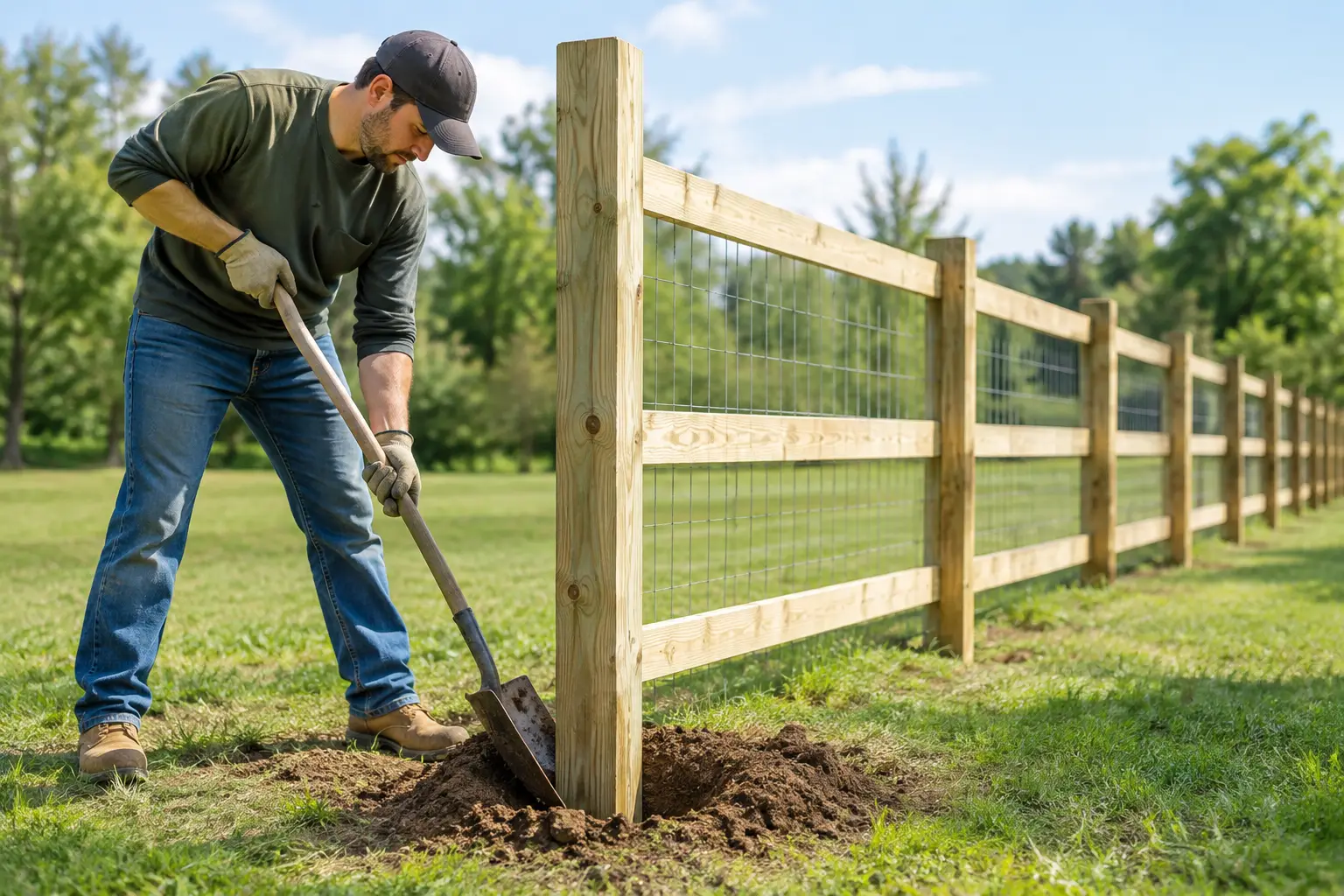
A fence can look straight on installation day and still start leaning within a season if its posts are not set at the right depth. Homeowners often ask, “how deep should fence posts be?” because the answer affects everything above ground: privacy panels, gates, pet containment, and the long-term appearance of the yard.
For most residential fences, a reliable starting point is to bury about one-third of the total post length. A 6-foot-tall fence commonly needs posts set 24 to 36 inches into the ground, depending on the fence material, soil conditions, terrain, and whether the post must support a gate. In Lynchburg and across Central Virginia, a proper depth is only part of the decision. The hole, drainage, concrete use, and layout all matter too.
How Deep Should Fence Posts Be for Most Yards?
The one-third rule is a useful guideline, not a substitute for evaluating the property. If the finished fence height is 6 feet and the post extends 3 feet below grade, you would typically use a 9-foot post. That below-ground section gives the post enough resistance to wind, fence weight, and everyday pressure from children, pets, and yard use.
For a typical 4-foot chain-link or aluminum fence, posts may be set around 24 inches deep. A 6-foot wood privacy fence often calls for 30 to 36 inches, especially where the fence creates a solid surface that catches the wind. Vinyl privacy fencing also needs stable post depth because its panels can place significant force on posts during strong storms.
Going deeper is often the safer choice when soil is loose, the fence is taller, or a section of the yard is exposed to wind. However, deeper is not automatically better if the installer uses an oversized hole, poor backfill, or posts that are not properly aligned. The goal is a stable foundation that fits the fence system and the site.
Fence Height Changes the Required Post Depth
A short decorative boundary fence and a tall privacy fence do not place the same demands on their posts. Height adds leverage. When wind pushes against a 6-foot privacy panel, the force transfers through the rails and into the post below ground.
A 4-foot aluminum fence around a front yard may need less depth than a 6-foot wood privacy fence enclosing a backyard. Chain-link fencing is more open to the wind, but its tensioned fabric and top rail still depend on secure terminal and corner posts. Those end, corner, and gate posts frequently need larger and deeper footings than line posts because they carry more concentrated force.
If you are planning an 8-foot privacy fence, do not simply treat it as a standard 6-foot installation with longer panels. Taller fencing can require deeper posts, stronger materials, and attention to local zoning or neighborhood requirements. An on-site review helps determine what will work safely and appropriately for the property.
Gate Posts Need Extra Support
A gate is one of the first places a poorly installed fence will show problems. The repeated opening, closing, and weight of the gate place steady stress on its hinge post and latch post. A sagging gate may come from worn hardware, but it can also point to shallow or shifting posts.
Gate posts should generally be set deeper and in larger holes than ordinary line posts. The right depth depends on the gate width, its material, and whether it is a single swing gate, double gate, or a heavier custom opening. Planning for that load before concrete is poured is far easier than correcting a leaning gate later.
Central Virginia Soil and Frost Matter
No two yards have exactly the same ground conditions. A level yard with firm, well-draining soil is different from a sloped property with clay-heavy ground, buried rock, or areas that stay wet after rain. Central Virginia homeowners may encounter dense red clay, which can hold posts firmly when dry but may retain water and shift differently through wet periods.
Frost is another consideration. When water in the soil freezes and expands, it can lift shallow footings or posts. Local frost depth, drainage, and exposure vary by site, so the installation should account for regional conditions rather than relying on a one-size-fits-all depth. Posts that are set too shallow are more vulnerable to movement from changing moisture and temperature.
A professional installer also looks for low spots, runoff patterns, and areas where water collects near the fence line. Standing water around a wood post can speed up decay, while poor drainage around any post can weaken the surrounding soil. A properly prepared hole and appropriate setting method help reduce those risks.
Should Fence Posts Be Set in Concrete?
Concrete is commonly used for fence posts, particularly for wood privacy fences, vinyl fences, gate posts, and terminal posts. It provides a firm footing that helps keep posts plumb and limits movement. But concrete alone cannot fix a shallow hole or a post installed in unsuitable ground.
For many residential projects, the process includes digging to the correct depth, adding a base that supports drainage where appropriate, positioning the post precisely, and placing concrete while checking alignment. The finished concrete should be shaped so water sheds away from the post instead of pooling around it. With wood posts, managing moisture at ground level is especially important for service life.
There are situations where compacted gravel or soil backfill may be used, depending on the fence type and installation method. Aluminum and chain-link systems can have different requirements than a solid wood privacy fence. The best method should follow the material manufacturer's guidance and the demands of the specific yard.
The Post Hole Needs the Right Size Too
Depth gets most of the attention, but hole diameter matters. A narrow, deep hole may not provide enough lateral support, while a hole that is unnecessarily wide can use more concrete without improving the installation. As a general approach, installers size the hole in proportion to the post and the loads it must carry.
Corner posts, end posts, and gate posts deserve more support than line posts. They handle tension from fence runs, changes in direction, and gate movement. On sloped yards, posts may also require more careful layout so the finished fence follows the terrain without leaving large gaps below it or creating awkward changes in height.
Before digging, it is also necessary to identify utilities and confirm the planned fence line. A correctly sized post hole is not helpful if it is placed over a buried utility, outside a property boundary, or too close to an easement.
Common Signs Posts Were Set Too Shallow
A new fence should stand straight and feel secure. If posts were not installed deeply enough, problems can develop gradually or appear soon after heavy rain, wind, or freezing weather. Watch for several related issues:
- Posts that lean while the panels or rails remain intact
- Gates that drag, bind, or no longer latch correctly
- Fence sections that move noticeably when lightly pushed
- Concrete footings that rise above grade or shift out of position
These signs do not always mean every post needs replacement. Sometimes a localized repair can stabilize one damaged or loose section. However, widespread leaning may indicate that the original post depth, footing size, or drainage approach was not adequate for the fence.
Match the Installation to the Fence You Need
The right post depth for a backyard privacy fence may be different from the right approach for a pool-area aluminum fence or a chain-link pet enclosure. Wood offers a classic, solid privacy barrier but needs thoughtful attention to post setting and moisture. Vinyl creates a clean privacy fence with a different post-and-panel system. Chain-link works well for practical containment, while aluminum is a strong choice where visibility and curb appeal matter.
That is why a site visit is more useful than a generic measurement from a chart. Fence height, gates, soil, slopes, drainage, and the purpose of the fence all shape the installation plan. Liberty Fence LLC provides free on-site estimates for homeowners in Lynchburg and surrounding Central Virginia communities, helping turn a general fencing goal into a plan that fits the property.
A well-set post is not the most visible part of a new fence, but it is the part that lets the finished fence keep doing its job year after year. Before choosing a depth, have the yard and the fence design evaluated together so privacy, safety, security, or pet containment is supported from the ground up.