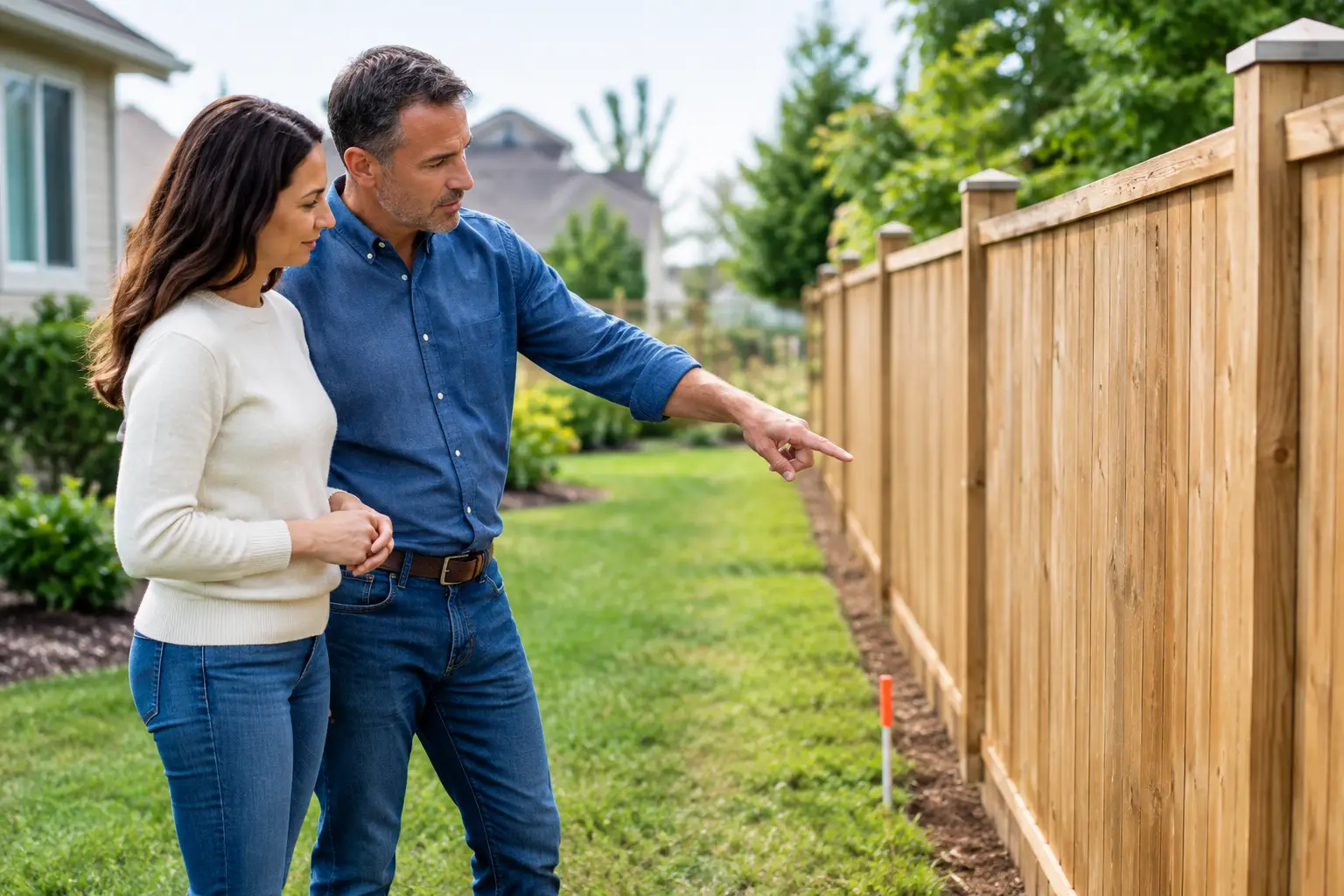
A new fence can make a Lynchburg yard feel more private, secure, and useful almost immediately. But fence property lines need to be addressed before the first post hole is dug. A fence that sits a few feet into a neighbor’s yard, crosses an easement, or conflicts with local requirements can create an expensive problem that no homeowner intended.
The good news is that most boundary questions can be handled with a little preparation. Knowing where your property begins and ends gives you a better foundation for choosing the fence style, layout, gates, and material that fit your home.
Start With the Actual Property Boundary
A yard may have an informal boundary that everyone recognizes, such as an old row of shrubs, a worn path, or an existing fence. That visible line is not always the legal property line. Previous owners may have installed a fence for convenience, to avoid a tree, or because the original boundary was never confirmed.
Your deed, plat, or closing documents may provide useful information about your lot. However, those documents do not always make it easy to identify the precise line on the ground, particularly on wooded, sloped, or irregularly shaped properties. If there is any uncertainty, a current property survey is the clearest way to establish the boundary.
Survey markers may be located at property corners, but they can be buried, moved, or difficult to identify. Avoid relying solely on a metal pin, an old fence section, or a neighbor’s recollection. When the location matters, especially for a fence installed close to the edge of the lot, professional survey information is worth the effort.
Why Fence Property Lines Matter Before Installation
Installing in the wrong location can lead to more than an awkward conversation. A neighbor may ask that the fence be moved, even after the project is complete. That can mean removing posts, replacing panels, repairing landscaping, and paying for work twice.
The boundary also affects how much usable yard remains on your side of the fence. A family installing a privacy fence for children or dogs usually wants to enclose as much functional space as possible. Leaving an unnecessary strip of land outside the fence can make mowing harder and can reduce the area available for play, gardening, or outdoor seating.
At the same time, placing a fence directly on a line is not always the best approach. Some homeowners choose to install slightly inside their property so maintenance can be performed entirely from their own yard. This can be practical for wood privacy fencing, where access may be needed over time for cleaning, staining, repairs, or replacement.
Check Local and Neighborhood Requirements
Property lines are only one part of fence planning. Depending on where you live in Lynchburg or the surrounding Central Virginia area, your project may be affected by local zoning rules, permit requirements, utility easements, or homeowners association guidelines.
Corner lots deserve extra attention. A fence that is acceptable along a side or rear yard may have height or placement limits near a street intersection because of sight-distance concerns. Front-yard fencing can also be treated differently from fencing in a side or back yard.
If your neighborhood has an HOA, review its rules before selecting materials or scheduling installation. Some communities regulate fence height, color, style, gate placement, and which sides of the property may be enclosed. Approval may be required before work begins. A wood privacy fence, vinyl fence, aluminum fence, or chain-link fence may each be allowed under different conditions.
Easements are another consideration. Utility companies may have rights to access portions of a property for service lines, drainage, or other infrastructure. A fence can sometimes be installed near or across an easement, but it may need to be removed if access is required. The right solution depends on the specific easement and the layout of the lot.
Talk With Your Neighbor Early
You are not always required to get a neighbor’s permission to install a fence on your own property, but a direct conversation is usually a good idea. It gives both households a chance to discuss the proposed location, height, style, and which side of the fence will face outward.
This is especially helpful when a fence will change a shared view, affect access to a side yard, or replace an older boundary fence. A neighbor may have useful information about drainage, past survey questions, or underground features near the line. Just remember that a friendly agreement does not replace a confirmed legal boundary.
If neighbors plan to share costs, responsibilities, or a fence placed directly on the boundary, put the agreement in writing. Clear expectations can prevent confusion later if either property is sold or if repairs are needed.
Choose the Fence Layout Around How You Use the Yard
Once the boundary and site considerations are clear, the fence should be designed for daily life. The best layout is not always a simple rectangle around the perimeter. Gates, slopes, patios, sheds, pools, mature trees, and drainage paths all affect the final plan.
For privacy, a wood or vinyl fence can create a more enclosed backyard and block views from nearby homes. Wood offers a traditional appearance and can be customized in height and style. Vinyl provides a clean, low-maintenance option for homeowners who want lasting privacy without regular painting or staining.
For pet containment, chain-link fencing is often a practical choice. It provides a defined boundary and clear visibility, and it works well for many larger yards. Aluminum fencing can be a strong fit around pools, gardens, and landscaped areas where homeowners want security without closing off the view.
Terrain matters as much as material. A steep or uneven backyard may need stepped panels, racked sections, or careful post placement to avoid large gaps at the ground. The position of each gate should also be planned around lawn equipment, trash pickup, foot traffic, and how your family enters the yard.
Do Not Skip Utility Locating
Before post holes are dug, underground utility lines need to be identified. This step protects your home, your installer, and the utility infrastructure serving the property. Gas, electric, water, communications, and other lines may run through areas that look clear from the surface.
A utility locate does not replace a survey, and a survey does not replace a utility locate. They answer different questions. One helps establish where your property is located; the other helps identify underground lines that could be affected by installation.
It is also wise to point out irrigation systems, invisible pet fences, landscape lighting, septic components, and private lines that may not be included in a standard utility marking process. Knowing about these features before installation helps avoid unnecessary repairs and keeps the project moving.
Work From a Clear On-Site Plan
A professional on-site estimate is the right time to discuss the property boundary, intended fence line, material preferences, and any site conditions that could affect installation. Bring up concerns about surveys, HOA rules, easements, drainage, gates, or neighboring fences early. Small details are much easier to address before materials are ordered and posts are set.
Liberty Fence LLC helps Central Virginia homeowners plan residential wood, vinyl, chain-link, and aluminum fencing around the way their properties are actually used. A clear conversation on site can turn a general idea for more privacy or a safer yard into a practical installation plan.
A fence should make your home easier to enjoy, not leave you wondering whether it belongs where it stands. Confirm the line, plan for the site, and build a boundary that serves your household for years to come.