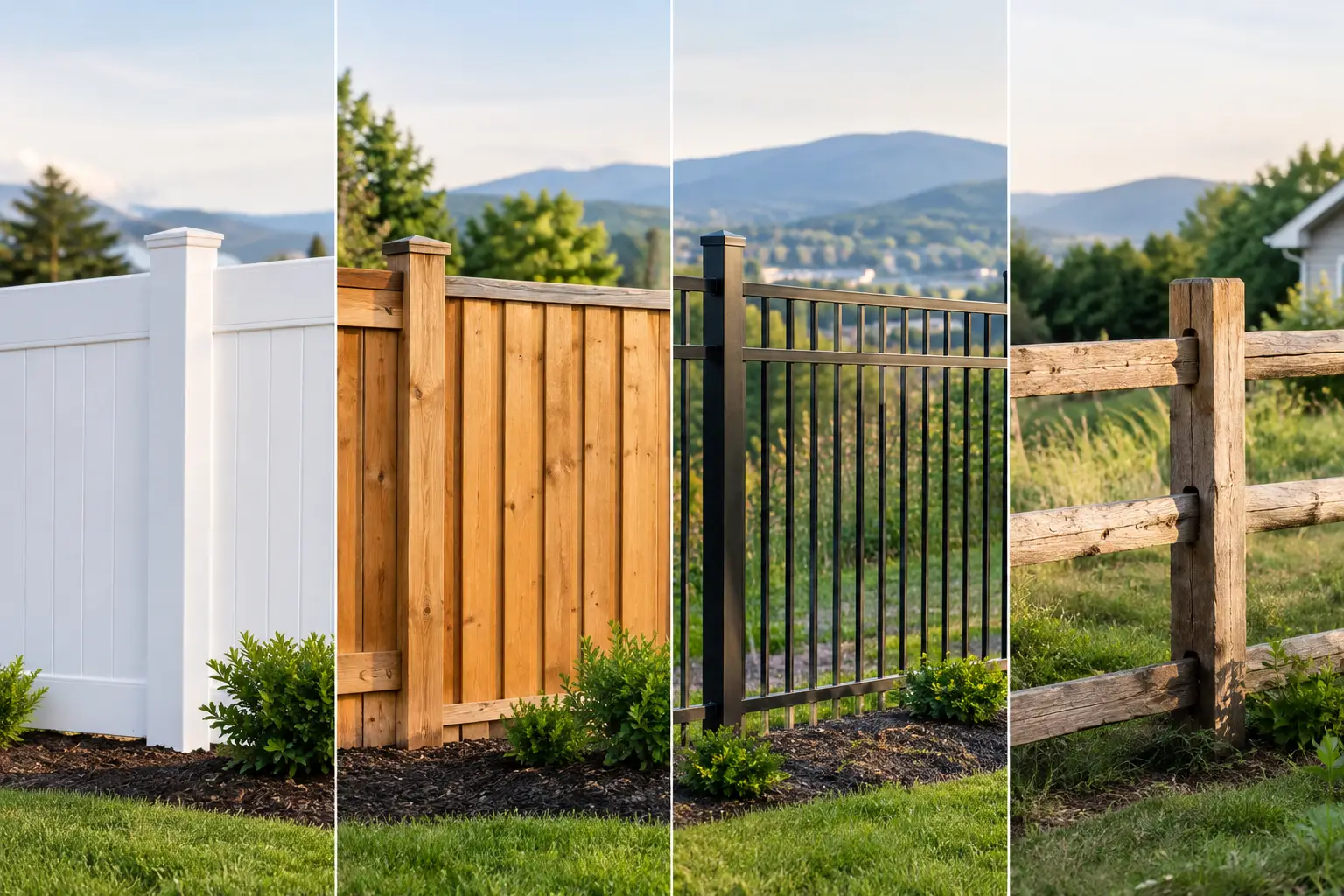
A fence can solve a very specific problem in your yard: the dog needs a secure place to run, the patio needs more privacy, or the pool area needs a safer boundary. A useful fence material comparison starts there, not with a color sample. For Lynchburg homeowners, the right choice depends on what the fence must do, how much maintenance fits your routine, and how the property itself is laid out.
Wood, vinyl, chain link, and aluminum all have a place in Central Virginia neighborhoods. Each offers a different balance of privacy, visibility, strength, upkeep, and appearance. The best material is rarely the same for every property.
Start With the Job Your Fence Needs to Do
Before comparing materials, identify the fence's primary purpose. A solid backyard privacy fence has different requirements than a front-yard boundary marker. A fence intended to contain an energetic dog may need a different height, gate design, and ground clearance than one installed mainly for curb appeal.
Privacy is usually the deciding factor for wood and vinyl. Pet containment often leads homeowners toward wood, vinyl, or chain link, depending on the dog's size and the desired level of visibility. Aluminum is often selected around pools, gardens, and front yards where an open, finished look matters more than screening the view.
Your lot also affects the decision. Sloped ground, drainage patterns, mature trees, existing landscaping, and the location of utilities can all influence the fence layout and installation approach. This is why an on-site review is more useful than choosing a material based on photos alone.
Fence Material Comparison: Wood, Vinyl, Chain Link, and Aluminum
Wood fencing for privacy and a traditional look
Wood remains a practical choice for homeowners who want meaningful privacy and a classic residential appearance. A properly designed wood privacy fence can create a more comfortable backyard for family time, grilling, pets, and outdoor entertaining. It can also be built in several styles, from straightforward board-on-board privacy designs to more decorative options.
One advantage of wood is flexibility. It can be stained or painted, and it works well when a homeowner wants a natural look that fits an established neighborhood. Wood can also be a good option when the design calls for a custom height or a particular style of gate.
The trade-off is maintenance. Wood is exposed to Central Virginia heat, rain, humidity, and seasonal temperature changes. It should be inspected regularly for loose boards, aging fasteners, moisture damage, and changes around posts and gates. Staining or sealing at appropriate intervals helps protect its appearance and service life.
Wood makes sense when privacy is the priority and you are comfortable giving the fence periodic care. It is also a strong replacement choice when an older wood fence has reached the point where repeated repairs no longer provide good value.
Vinyl fencing for lower-maintenance privacy
Vinyl fencing gives homeowners a clean, consistent appearance with less routine upkeep than wood. It is available in privacy styles as well as picket and semi-private designs, making it a versatile option for backyards, side yards, and property lines. Many homeowners choose vinyl because it provides solid screening without the need for staining or painting.
Routine care is generally simple. Washing off dirt, pollen, and yard debris can keep a vinyl fence looking neat. The material does not rot like wood, and it is not vulnerable to insect damage. For busy households, that lower-maintenance benefit can be a major reason to choose it.
Vinyl has its own considerations. The initial cost may be higher than some wood or chain-link options, and repairs should use compatible components so the fence retains its proper fit and appearance. The installation quality matters as well. Posts, rails, and gates need to be set correctly so the system stays aligned through normal use and changing weather.
Choose vinyl when you want privacy or a polished boundary with minimal ongoing maintenance. It is especially appealing for homeowners who prefer a uniform white, tan, or similar finished look over the natural variation of wood.
Chain-link fencing for practical security and pet areas
Chain-link fencing is a straightforward, cost-conscious option for securing a yard or defining a boundary. It is commonly used for dog runs, backyard pet containment, and areas where visibility is preferred. Because it allows light and airflow through, it does not make a smaller yard feel as enclosed as a solid privacy fence can.
For many families, chain link answers the main question quickly: how can we create a dependable enclosed space for the dog and still see the yard? It can be an efficient solution, particularly on larger properties or along less visible side and rear boundaries.
Its limitation is privacy. Standard chain link does not block neighboring views, traffic, or activity. Privacy slats or landscaping may help over time, but they do not create the same finished screen as a wood or vinyl privacy fence. Some homeowners also prefer another material where the fence is highly visible from the street.
Chain link is often the right choice when function, durability, and budget are the primary concerns. Gate placement and latch operation deserve close attention, especially for households with children or pets. A secure enclosure is only as useful as the access points built into it.
Aluminum fencing for open views and finished curb appeal
Aluminum fencing is valued for its clean lines, low-maintenance finish, and open appearance. It works well for pool areas, front yards, gardens, and properties where homeowners want a defined boundary without blocking views. Its ornamental look can add structure to a landscape while allowing sunlight and sightlines to remain open.
Pool-area fencing is one of the most common reasons to consider aluminum. The fence can create a clear safety barrier while still letting adults see the pool area from the house or patio. Specific pool barrier requirements can vary, so the final layout, gate hardware, and height should be planned around the property and applicable local requirements.
Aluminum does not offer privacy, and it may not be the best fit for every dog. Small pets may be able to pass through wider picket spacing, while determined climbers or diggers may need a different containment plan. It is also important to choose a style and height that match the fence's intended use rather than selecting solely for appearance.
For homeowners who want a refined boundary and little routine maintenance, aluminum is a strong option. It is especially effective where the view is part of what makes the property enjoyable.
Consider Maintenance, Repairs, and Long-Term Value
A fence is not a one-time decision if you plan to stay in the home for years. Think about the attention each material will require after installation. Wood needs the most active care, but it offers warmth and design flexibility. Vinyl and aluminum generally require less maintenance, while chain link is practical and durable but less private.
Repairs are another part of the comparison. Storm damage, shifting soil, falling limbs, worn gate hinges, and damage from regular use can affect any fence material. In many cases, a targeted repair can extend the useful life of an existing fence. In other cases, widespread leaning, rotted posts, repeated gate problems, or multiple damaged sections may point toward replacement.
Long-term value is not only about the initial price. A fence that fits the way your household uses the yard can improve daily life right away. A secure area for a pet, a private place to relax, or a safer pool boundary has value that is hard to measure solely by material cost.
Match the Fence to Your Property, Not Just Your Neighbor's
A fence that looks right on one property may be a poor fit on the next. Nearby homes may have different lot grades, drainage, setback considerations, pets, or privacy needs. Homeowners should also confirm property lines and review any neighborhood association requirements before finalizing a style, height, or location.
An on-site estimate helps turn broad preferences into a workable plan. Liberty Fence LLC can assess the layout, discuss the purpose of the fence, and help homeowners weigh wood, vinyl, chain link, and aluminum options for their specific yard. That conversation should include gate locations, terrain, access for installation, and any existing fencing that will remain or need repair.
The right fence material should make your property easier to enjoy. Start with the problem you want to solve, then choose the option that gives you the privacy, security, visibility, or curb appeal your home needs.