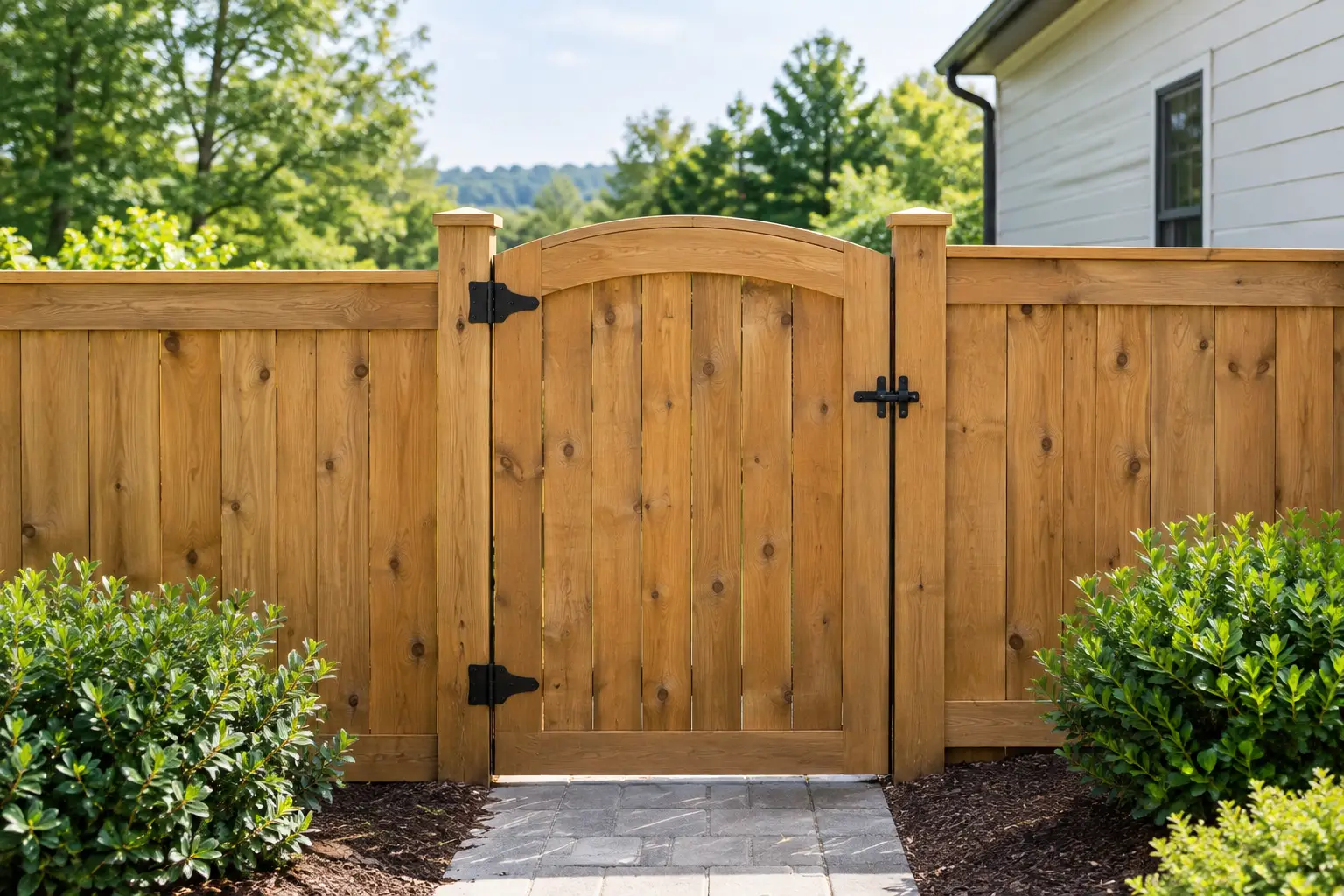
A fence can define a property, create privacy, and give children or pets a safer place to play. But fence gates are the part of the system you use every day. They need to open easily, latch securely, fit the way your family moves through the yard, and stand up to regular use in Central Virginia weather.
For many homeowners, the right gate is not simply an opening in the fence. It may be the route to the backyard from the driveway, the access point for lawn equipment, or the barrier that keeps a dog safely contained. Planning that gate well from the start helps prevent frustration after the fence is installed.
Start With How You Use the Yard
The best gate location depends on what happens on each side of the fence. A side-yard gate is often practical for taking out trash cans, reaching utility equipment, or moving between the front and back yard. A rear gate may provide access to a wooded area, alley, or neighboring property where appropriate. A wider opening near the driveway can make routine landscaping and maintenance much easier.
Think about your normal path through the property before choosing a location. If everyone enters the backyard from the driveway, placing the only gate at the far end of the house may become an everyday inconvenience. If you use a riding mower, wheelbarrow, or large equipment, a narrow walk gate may not be enough.
Gate swing direction matters, too. A gate should open into a clear area without striking steps, air-conditioning equipment, parked vehicles, or landscaping. On sloped ground, the swing may need more careful planning so the bottom of the gate does not drag. An on-site review gives the installer a chance to see those conditions before posts and panels are set.
Choose the Right Width for Fence Gates
Most residential fence gates fall into two practical categories: walk gates and wider access gates. A standard walk gate is usually sufficient for people, pets, and everyday yard access. Wider gates are better when a homeowner needs to bring in mowing equipment, a trailer, building materials, or landscaping supplies.
A double gate can provide a broad opening without requiring one oversized panel. When closed, the two leaves meet in the center and secure with appropriate hardware. This is often a good choice for a backyard access point near a driveway or for a property where equipment needs occasional entry.
Wider is not always better. A large gate is heavier and places more demand on posts, hinges, and latches. It needs proper support to avoid sagging over time. The goal is to provide enough room for the intended use while keeping the gate manageable and secure.
Match the Gate to the Fence Material
A gate should look and perform like part of the fence, not like an afterthought. Material selection affects privacy, maintenance, strength, and appearance.
Wood gates for privacy and a traditional look
Wood privacy fence gates are a natural fit for homeowners who want a solid, enclosed backyard. They can match the height and style of a wood privacy fence, helping create a consistent view from the street and from neighboring properties. Wood offers flexibility in design, but it does require attention to construction and support. Because a wood gate can be heavy, strong posts and quality framing are essential.
Wood can be a good choice for privacy around patios, play areas, and backyards. Homeowners should also expect periodic maintenance, such as staining, sealing, or addressing boards affected by moisture and sun exposure.
Vinyl gates for low-maintenance privacy
Vinyl fence gates offer a clean, consistent appearance and are popular with homeowners looking for privacy without the routine refinishing associated with wood. A vinyl gate should be built with reinforcement appropriate to its width and height. Proper hardware and post support are especially important because gates carry movement and weight that standard fence sections do not.
Vinyl can work well for a tidy backyard enclosure where easy upkeep is a priority. The design options may be more defined than with wood, so it helps to choose a style that fits the home and the rest of the fence system.
Chain-link gates for practical access
Chain-link gates are a dependable option for pet containment, boundary definition, and functional yard access. They are commonly used where visibility, durability, and value matter more than complete privacy. A chain-link walk gate can provide simple access to a dog run or backyard, while a wider double gate can accommodate equipment.
For homeowners with active dogs, the latch and the clearance beneath the gate deserve special attention. A determined dog may test a loose latch or find space under a poorly fitted gate.
Aluminum gates for open views and defined spaces
Aluminum gates pair well with aluminum fencing around pools, landscaped yards, and areas where homeowners want a more open view. They provide a refined look without blocking sightlines across the property. Aluminum is also a practical choice when low maintenance is a priority.
Because aluminum fencing often has a lighter, more decorative profile than a privacy fence, gate placement and hardware should be selected carefully to maintain security and proper alignment. For pool areas, gate requirements can vary based on local rules and the specific property. A professional should assess the planned enclosure and recommend a gate setup that supports safety and applicable requirements.
Do Not Overlook Posts and Hardware
The gate itself gets attention, but the posts and hardware determine how well it works year after year. A gate that begins to sag, scrape the ground, or refuse to latch is often dealing with inadequate support, worn hinges, shifting posts, or a combination of those issues.
Quality hinges allow the gate to swing properly while carrying its weight. A dependable latch should close securely without requiring a hard pull or lift. For pet areas, child-accessible yards, and security-minded homeowners, the latch position and style should match the purpose of the enclosure.
Gate posts must be set and sized to support the gate they carry. This is particularly important for wood gates and double gates. Central Virginia soil conditions, changes in grade, and seasonal weather all make careful installation worthwhile. A gate may appear level on installation day, but proper structural support is what helps it remain functional over time.
Safety Features Depend on the Space
A backyard gate for a quiet garden does not need the same features as a gate surrounding a pool or containing a large dog. The right solution depends on who uses the yard and what needs to be protected.
For a pet enclosure, focus on a secure latch, limited gaps, and a gate height that suits the animal. For families with young children, consider whether the gate should be difficult for a child to open independently. Pool-area gates require especially careful planning, including self-closing and self-latching features when required by applicable codes or safety standards.
Security also has practical levels. A locking gate may make sense for an access point facing a street, an alley, or a shared area. In other locations, a reliable standard latch may be the better fit. The most useful gate is one that balances access for your household with the level of control your property needs.
When an Existing Gate Needs Repair
A gate does not have to be completely broken before it needs attention. If it drags across the ground, will not stay closed, leans noticeably, has loose boards, or requires force to latch, the problem can worsen with continued use. Small adjustments may be possible in some cases, while damaged posts, rotted wood, bent hardware, or a poorly built gate may call for more substantial repair or replacement.
Homeowners sometimes replace only the gate when the surrounding fence is aging as well. That can be a reasonable choice if the adjacent posts and sections remain sound. If the fence has widespread damage or movement, however, it is often better to evaluate the entire area so the new gate is not attached to failing components.
Plan the Gate Before the Fence Is Installed
A gate works best when it is planned as part of the complete fence layout. Before installation, consider where you park, where pets go outside, how lawn care is handled, where utilities are located, and whether future projects might require wider access. These details can prevent expensive changes later.
Liberty Fence LLC can review your property during a free on-site estimate and help identify a gate location, width, material, and hardware setup that fits how you actually use your yard. A well-planned gate makes the fence easier to live with every day, from the first trip outside with the dog to the next backyard project.