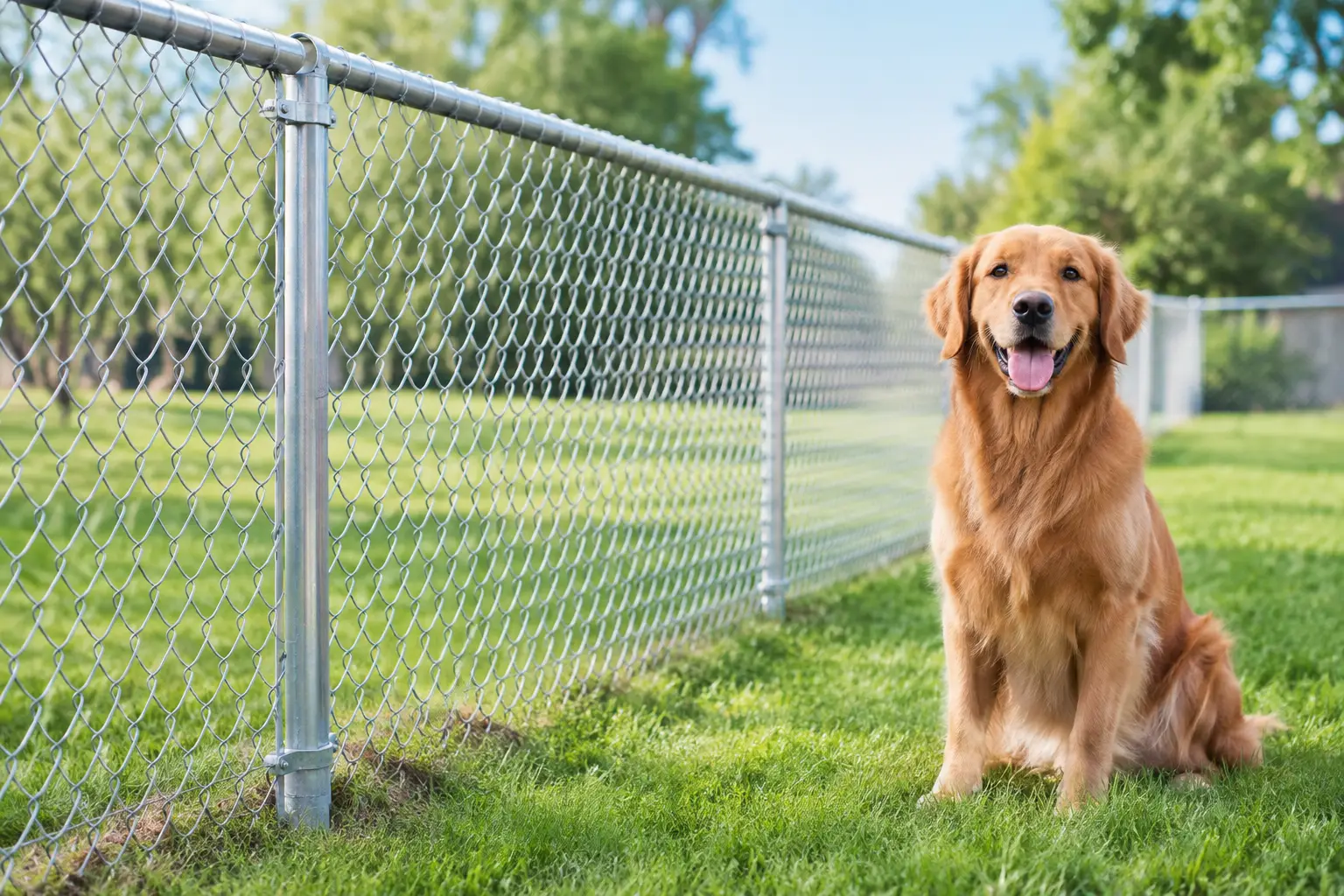
A dog that slips through an open gate or finds a weak spot under a fence can turn a normal afternoon into a stressful search. For many Central Virginia homeowners, a chain link fence for dogs is a practical way to create a defined outdoor space where pets can run, play, and spend time outside with less risk of wandering away.
Chain link is not the right answer for every property or every dog. It does not provide the privacy of wood or vinyl, and determined climbers or diggers may need additional safeguards. But when the system is planned around your dog’s size, behavior, and the layout of your yard, it can be an affordable, durable containment solution that holds up well over time.
Is a Chain Link Fence for Dogs Right for Your Yard?
Chain link fencing is a strong fit for homeowners whose first priority is pet containment. The open mesh keeps sightlines clear, which can be useful when you want to watch your dog from the house or keep an eye on children playing in the yard. It also allows air and sunlight through, making it a good option for open yards, garden areas, and side yards that would feel closed in with a solid privacy fence.
For many homeowners, cost is another factor. Chain link often provides dependable coverage for a larger yard at a lower cost than several other fencing materials. It is also resistant to rot, making it a sensible choice for Lynchburg-area properties that see humid summers, rain, and changing seasonal conditions.
The trade-off is visibility. Your dog can see people, wildlife, passing cars, and neighboring pets through the fence. Calm dogs may enjoy the view without issue. Dogs that bark, pace, or react strongly to activity outside the yard may do better with a privacy fence or with added screening along the areas that create the most distraction.
Start With Your Dog, Not Just the Fence Line
The right fence height depends less on the breed listed on a veterinary form and more on what your dog actually does outdoors. A small, relaxed dog has different containment needs than an athletic dog that jumps when excited or a large dog that leans against the fence when someone walks by.
A 4-foot chain link fence can work well for many small and medium-sized dogs. For larger breeds, active dogs, and dogs with a history of jumping, a 5- or 6-foot fence is often the safer choice. Choosing a taller fence from the start can be less costly and less disruptive than replacing a too-short fence later.
Dogs that climb need a different conversation. Chain link gives some dogs footholds, especially if they are motivated by squirrels, other dogs, or activity beyond the property line. A taller fence may help, but it may not solve the problem by itself. Your installer can discuss options such as a more secure top treatment, modifications to reduce climbing opportunities, or a different fence material for the sections where your dog is most likely to attempt an escape.
Digging matters just as much as jumping. If your dog has a habit of digging near borders, the bottom of the fence should be planned carefully. Proper installation and tension at the base help limit gaps. Depending on the dog and site conditions, additional measures may be appropriate along problem areas. The goal is to prevent a small opening from becoming a regular exit route.
Fence Height and Mesh Strength Matter
Not all chain link systems are built for the same job. The mesh is commonly described by its gauge, and lower gauge numbers generally indicate thicker wire. A stronger mesh can be a worthwhile choice for large dogs, energetic dogs, or households where the fence may receive regular pressure from pets running along it.
Posts, rails, fittings, and tension wire are equally important. The mesh is only as dependable as the framework supporting it. Properly set terminal posts, line posts, top rails, and gate hardware help the fence stay aligned and secure rather than sagging over time.
A professional on-site assessment is useful here because the soil, slope, yard shape, and total fence length all affect the system. A short run beside a patio may have different needs than a long perimeter on a sloped lot. A contractor should look beyond the linear footage and recommend a layout that makes sense for daily use.
Plan Gates Around Real Life
The gate is one of the most important parts of a dog fence. It needs to open and close reliably, latch securely, and be located where your household will actually use it. A gate placed near the driveway, back door, patio, or garage can make trips outside more convenient and reduce the temptation to leave a gate propped open.
For a dog containment area, a self-closing or self-latching gate may be worth considering, particularly for families with children or frequent visitors. The best option depends on how the gate will be used and whether you need access for lawn equipment, trash bins, or larger equipment.
A walk gate may be enough for a simple backyard enclosure. If you need to bring in a mower, landscaping materials, or other equipment, a wider gate can prevent a future headache. It is easier to plan access before installation than to alter a finished fence later.
Check the Yard for Escape Routes
Before deciding on a fence layout, walk the proposed perimeter with your dog’s behavior in mind. Look for grade changes, drainage paths, low spots, retaining walls, sheds, decks, and existing landscaping. These features can create gaps or give a dog a boost near the fence.
Pay close attention to the space beneath gates. Uneven ground can leave an opening large enough for a small dog to squeeze through or for a determined dog to start digging. Corners also deserve attention, since dogs often patrol and dig there first.
A useful containment check includes these four questions:
- Can your dog jump, climb, squeeze through, or dig under the proposed fence?
- Will a slope create gaps at the bottom of the mesh or beneath a gate?
- Are there structures or stacked materials near the fence that could help a dog climb out?
- Does the layout give you convenient access without forcing people to cross the dog’s play area?
These details are not reasons to avoid chain link. They are the reasons a fence should be designed for the specific property instead of treated as a one-size-fits-all product.
Consider Privacy, Appearance, and Neighborhood Setting
A chain link fence is functional by design, but it does not have to feel out of place. Black vinyl-coated chain link can offer a more subdued appearance than standard galvanized steel and may blend more naturally with landscaping. It can be a good fit for homeowners who want the practical benefits of chain link with a less industrial look.
Privacy is the larger decision. If your dog becomes overstimulated by everything beyond the yard, a wood privacy fence or vinyl fence may better support a calmer outdoor routine. If you like the visibility of chain link but want to block one busy edge of the property, you may be able to use landscaping or screening strategically. The best material often depends on whether pet containment is your only goal or one part of a broader plan for privacy, curb appeal, and family use.
Professional Installation Helps Protect the Investment
A fence for dogs must do more than mark a boundary. It needs to remain stable through weather, yard maintenance, repeated gate use, and the daily energy of a pet that races along the perimeter. Correct post placement, secure fittings, proper tension, and thoughtful gate installation all affect how the fence performs.
Liberty Fence LLC works with Lynchburg and Central Virginia homeowners to evaluate residential yards and recommend fencing around the needs of the property. A free on-site estimate gives you the opportunity to discuss your dog’s size and habits, desired fence height, access needs, terrain, and appearance preferences before work begins.
A well-planned chain link fence gives your dog room to enjoy the yard while giving you more confidence when the door opens. The right layout starts with an honest look at how your pet behaves outside and a fence system built to meet that everyday reality.