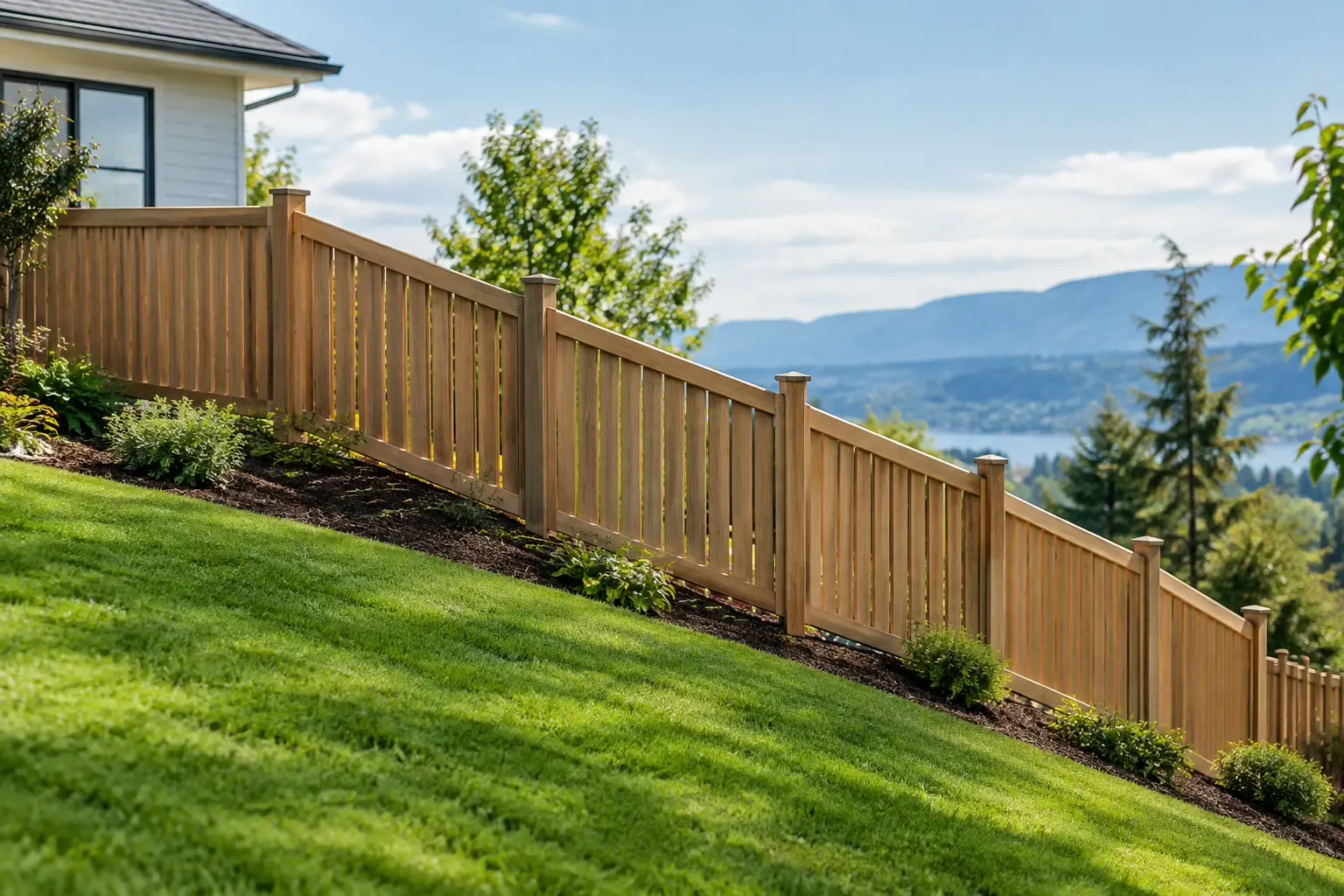
A sloped backyard can make a standard fence project more complicated quickly. A fence that looks level from the street may leave gaps underneath, step awkwardly across the grade, or fail to give a dog or young child the containment you expected. The best fence for a sloped yard depends on how steep the grade is, what the fence needs to do, and which material can be installed to follow the property naturally.
For Lynchburg and Central Virginia homeowners, the right answer is often less about choosing a single “best” material and more about matching the fence style and installation method to the yard. A free on-site estimate is the practical first step because slope, drainage, access, and property lines all affect the final plan.
Two Ways to Fence a Sloped Yard
Most residential fences on uneven terrain are installed using one of two approaches: stepped panels or racked panels.
A stepped fence keeps each panel level and moves it up or down in noticeable increments as the grade changes. This creates a clean, stair-step appearance. It works well with many wood privacy fences and with preassembled vinyl panels that cannot bend with the slope. The trade-off is the space that can appear below each panel where the ground falls away. On a yard used by small dogs, those openings may need to be addressed.
A racked fence follows the slope of the ground. Rather than staying level, the rails and pickets gradually angle with the terrain. This usually creates a closer fit at the bottom of the fence and a more continuous line across the yard. Racking is especially useful where containment matters or where the slope is gradual but long.
The best installation method depends on the grade. A mild, consistent slope is often a good candidate for racking. A sharp drop, changing grade, or terraced yard may require stepped sections, custom transitions, or a combination of both methods.
Best Fence Materials for a Sloped Yard
Each fencing material handles slopes differently. Privacy, maintenance expectations, budget, and the appearance of the home should all be part of the decision.
Wood Privacy Fence
A wood privacy fence is often one of the most flexible choices for a sloped yard. Wood can be custom built on site, allowing the installer to adjust panel height, rail placement, and picket length for the grade. It can be stepped or constructed to follow many gradual slopes, depending on the fence design.
For homeowners who want a private backyard for family time, outdoor entertaining, or a more secluded pool-adjacent area, wood provides the solid coverage that open-style fencing cannot. It also gives more room for custom details, such as a board-on-board design, decorative top treatment, or a gate built for uneven ground.
Wood does require routine care. Central Virginia weather brings moisture, heat, and seasonal changes that can affect any natural wood product. Staining, sealing, and occasional repairs help protect the fence and preserve its appearance. Still, when a yard has irregular terrain and privacy is the priority, wood is often a strong practical option.
Aluminum Fence
Aluminum fencing is a popular choice for sloped yards because many aluminum systems can rack to follow the grade. The rails adjust within the panel design, allowing the fence to move with the slope rather than creating large openings below it. This gives the yard a cleaner finished look on gradual grades.
Aluminum works especially well for homeowners who want defined boundaries, pet containment, or pool-area safety without blocking the view. Its open design can be a good fit for properties with wooded edges, landscaped yards, or scenic views that a solid privacy fence would cover.
The limitation is privacy. Aluminum is not designed to create a private enclosure, and it may not contain very small pets if the picket spacing is too wide. It is also not the right choice for every severe grade. An on-site review helps determine whether the panel style can rack enough for the slope or whether stepped sections are needed.
Chain-Link Fence
Chain-link fencing is another practical material for uneven yards. Its flexible fabric can follow slopes effectively, making it a reliable option for pet containment, security, and defining a large residential boundary. It is commonly used where function matters most and the homeowner wants an efficient way to enclose the yard.
Because the mesh follows the terrain, chain link can reduce the gaps that sometimes occur with stepped fencing. This matters for dogs that like to dig, squeeze through low spots, or patrol the fence line. A properly planned bottom clearance and secure posts are still essential, particularly where the ground is washed out or uneven.
Chain link does not provide privacy on its own. Privacy slats or landscape screening can change the look, but they also add wind resistance and maintenance considerations. For a straightforward containment fence on a sloped backyard, however, chain link remains one of the most adaptable choices.
Vinyl Fence
Vinyl fencing offers a clean appearance and low-maintenance ownership, but slope is one of the main factors that needs careful planning. Some vinyl fence systems can rack within a limited range, while many privacy-style vinyl panels are installed in stepped sections. The exact capability depends on the product and style.
For a gently sloped yard, vinyl can be an attractive solution for privacy and curb appeal. It does not need painting or staining, and its consistent color works well for homeowners replacing an older fence or finishing a recently purchased home. On a steeper grade, stepped vinyl panels can still look sharp when installed with the right layout.
The key concern is the space below each stepped panel. If pets need to stay securely inside the yard, the fence plan may need grading adjustments, extended pickets, or another detail that closes low areas without trapping water or creating a weak point.
What Makes One Sloped Yard Different From Another
Slope alone does not tell the full story. A gradual hill from one side of the yard to the other is very different from a yard with a short, steep bank near the property line. The grade may also change direction, which can affect where posts, gates, and fence corners need to go.
Drainage deserves close attention. Water running down a hill can erode soil around fence posts, create low spots under panels, and make gates harder to operate over time. A good fence layout accounts for where water travels after heavy rain. It should not block a natural drainage path or place a post where runoff will continually wash away supporting soil.
Access matters too. A sloped property may have retaining walls, landscaping, utility equipment, mature trees, or narrow side yards that affect installation. Property lines should be confirmed before post locations are selected. A fence should solve a homeowner’s needs without creating an avoidable dispute with a neighbor.
Gates Need Extra Planning on a Hill
A gate installed on a slope cannot be treated like a standard opening. If the gate swings downhill, it may drag across the ground. If it swings uphill, the clearance and latch placement need to be planned carefully. In some cases, changing the swing direction, adjusting the grade near the opening, or using a different gate layout is the better solution.
This is particularly important for driveway gates, side-yard access, and backyard gates used daily for lawn equipment, trash bins, or pets. The gate should open easily, latch securely, and maintain appropriate ground clearance without leaving an escape route below it.
Choosing the Best Fence for Your Needs
If privacy is the main goal, a custom wood privacy fence is often the most adaptable choice, with vinyl also working well on manageable grades. If the goal is preserving views while following a gradual slope, aluminum fencing is frequently a good fit. For practical pet containment across uneven ground, chain link can be hard to beat.
There is no benefit to selecting a material based only on a flat-yard photo. The post depth, panel layout, transitions, ground clearance, and gate placement matter just as much as the material itself. A fence that is properly designed for the slope will look better, work better for the family, and hold up more reliably.
Liberty Fence LLC helps Lynchburg-area homeowners evaluate these details during a free on-site estimate. Seeing the grade in person makes it possible to recommend a wood, vinyl, chain-link, or aluminum fence that fits the yard instead of forcing the yard to fit a standard panel.
A sloped yard should not keep you from getting the privacy, safety, or pet-friendly space you want. Start with the way you use the yard, then let the terrain guide the fence design and material choice.