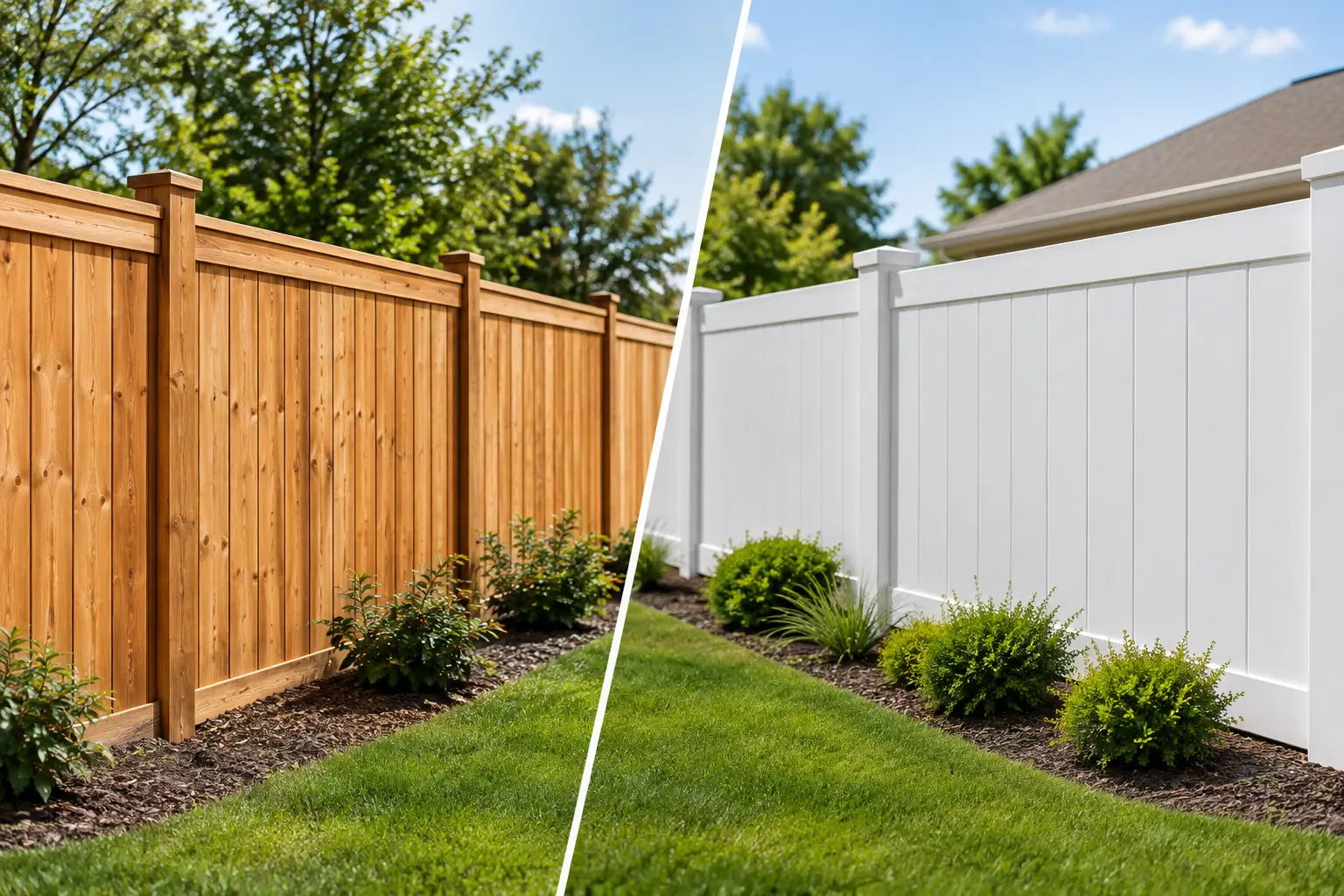
A privacy fence changes how a backyard feels. It can block sightlines from a neighboring deck, create a safer play area for children, give dogs a defined space, and make a patio or pool area more comfortable to use. For many Central Virginia homeowners, the best fence for privacy comes down to two proven choices: a wood privacy fence or a vinyl privacy fence.
Both can provide the full-height coverage most homeowners want. The better fit depends on your budget, preferred appearance, maintenance expectations, yard conditions, and how long you expect to stay in the home. A fence should solve the problem at your property, not simply look good in a product photo.
What Makes a Fence Good for Privacy?
A fence delivers real privacy when it has solid, closely fitted panels or boards with few visible gaps. Height matters as well. Six-foot privacy fencing is a common residential choice because it blocks most ground-level views while still fitting many neighborhood settings. Some properties may need a different height based on slope, sightlines, local requirements, or homeowners association rules.
The layout of the yard is just as important as the material. A fence on level ground is straightforward. A sloped Lynchburg yard, a corner lot, mature trees, drainage paths, or a shared property line can change the installation plan. Small gaps beneath a fence may be harmless for a boundary fence, but they can be a problem when privacy or pet containment is the goal.
Before choosing a style, consider what you need the fence to do. A backyard used for quiet evenings may call for complete visual coverage. A family with an active dog may need a secure gate, durable construction, and an installation approach that accounts for digging. If privacy is only needed along one side of the property, a full perimeter fence may not be necessary.
Wood Is Often the Best Fence for Privacy on a Natural-Looking Yard
Wood remains a popular privacy fence material for a reason. It has a warm, familiar look that works well with many homes in Lynchburg and surrounding Central Virginia communities. A traditional wood fence can be built with solid vertical boards, and it can be designed to complement the home rather than compete with it.
Wood also gives homeowners more visual flexibility than most materials. Board styles, top details, gate designs, and stains can change the finished appearance. If you want a fence with character or a color that coordinates with your home and landscape, wood offers plenty of room to personalize the project.
A properly installed wood privacy fence provides excellent screening. It is especially useful where neighboring homes sit close together or where a patio, hot tub, or outdoor dining area needs a more private setting. The solid construction also helps create a stronger sense of separation than open-style fencing.
Wood fence trade-offs
Wood requires routine care. Exposure to sun, rain, humidity, and seasonal temperature changes can eventually lead to fading, warping, cracking, or rot if the fence is not maintained. Staining or sealing can help protect the material and preserve its appearance, but it is a responsibility to plan for.
Wood may be the right choice if you value a traditional look and do not mind periodic maintenance. It can also be a practical option when homeowners want a high-quality privacy fence while keeping closer control of the initial project cost. The exact cost will depend on the length of the fence, design, gates, site access, terrain, and installation details.
Vinyl Privacy Fences Offer a Clean, Low-Maintenance Option
Vinyl fencing is another strong choice for homeowners who want full privacy with less ongoing upkeep. Solid vinyl panels create a clean, consistent barrier, and the material does not need staining or painting. For busy households, that is often the deciding factor.
A vinyl privacy fence is well suited to homeowners who prefer a polished, uniform appearance year after year. It can be an appealing option around patios, play spaces, and backyard gathering areas where a bright, orderly look matters. Cleaning is generally straightforward, often requiring only a rinse or mild soap and water when dirt or mildew appears.
Vinyl does not absorb moisture the way wood does, so it avoids many of the maintenance concerns associated with natural lumber. That does not mean it is maintenance-free or indestructible. It still needs professional installation, especially around gates, changes in grade, and areas exposed to wind. A damaged vinyl section may require a replacement component rather than a simple board repair.
Vinyl fence trade-offs
Vinyl typically has a higher upfront cost than a basic wood privacy fence. Its design options can also feel more limited for homeowners who want a custom, natural, or stained-wood appearance. While vinyl colors and styles offer some choice, it is generally less adaptable than wood once installed.
Vinyl can be an excellent long-term value for homeowners who want dependable privacy and want to minimize regular refinishing work. It is often a particularly good match for a recently purchased home where the owner wants to complete an outdoor improvement project and spend more time using the yard than maintaining the fence.
Wood vs. Vinyl: Which Privacy Fence Fits Your Priorities?
There is no single answer for every property. Wood is often the better choice when appearance, customization, and initial cost are major priorities. Vinyl is often the better choice when low maintenance and a consistent finished look are more important.
Think about the next five to 10 years, not just the day the fence is installed. If you enjoy maintaining exterior features and prefer the character of real wood, a wood privacy fence can be a satisfying investment. If staining and repairs are chores you would rather avoid, vinyl may justify its higher initial cost.
Your home’s style matters too. A wood fence can feel right at home beside a traditional property, a wooded lot, or a landscape with mature trees. Vinyl often complements homes with clean exterior lines and homeowners who prefer a uniform, finished appearance. Neither choice is automatically better. The best one is the material that meets your expectations after the first season, not just on installation day.
Why Chain Link and Aluminum Usually Are Not Privacy Fences
Chain-link and aluminum fencing are reliable residential choices for specific needs, but neither provides privacy on its own. Chain link is practical for defining a boundary, securing a yard, and containing pets. Aluminum is a popular choice for pool-area safety, open views, and an attractive boundary line.
Privacy can sometimes be added to chain link with screening, landscaping, or other treatments, but those approaches do not perform like a solid wood or vinyl privacy fence. Aluminum fencing can work alongside shrubs or trees where homeowners want a more open property edge, but it will not block views from nearby homes.
If your main goal is privacy, start with a solid wood or vinyl design. If your main goal is security, pet containment, pool safety, or preserving a view, chain link or aluminum may be the more practical material.
Details That Affect Privacy Fence Performance
A good material cannot overcome a poor layout or weak installation. Gates should close securely and align properly. Posts need to be set for the soil conditions and fence height. Panels or boards should follow the planned grade without creating unnecessary gaps that reduce privacy or give pets a way out.
Property lines deserve careful attention before installation begins. Homeowners should understand where the fence belongs, whether utility locations need to be marked, and whether local or neighborhood rules affect height, placement, or style. A fence is a permanent improvement, so getting these details right protects both the project and neighbor relationships.
For sloped yards, the installation method matters. A stepped fence follows the slope in level sections and may leave triangular spaces beneath panels. A fence that follows the grade can reduce those gaps, though the appropriate approach depends on the material and the site. An on-site review makes these choices much clearer than trying to judge them from a property survey or online photo.
Choose Privacy Based on Your Yard, Not a One-Size-Fits-All Answer
The best privacy fence should give you the coverage you need without creating more maintenance, cost, or design limitations than you expected. Wood delivers a classic, customizable privacy solution. Vinyl delivers solid coverage with a clean look and reduced upkeep. Both can make a backyard feel more secure, useful, and comfortable.
For homeowners in Lynchburg and Central Virginia, a free on-site estimate is the practical next step. Liberty Fence LLC can look at the terrain, property layout, privacy concerns, gate needs, and preferred material to recommend a fence plan that works for the way you use your home.