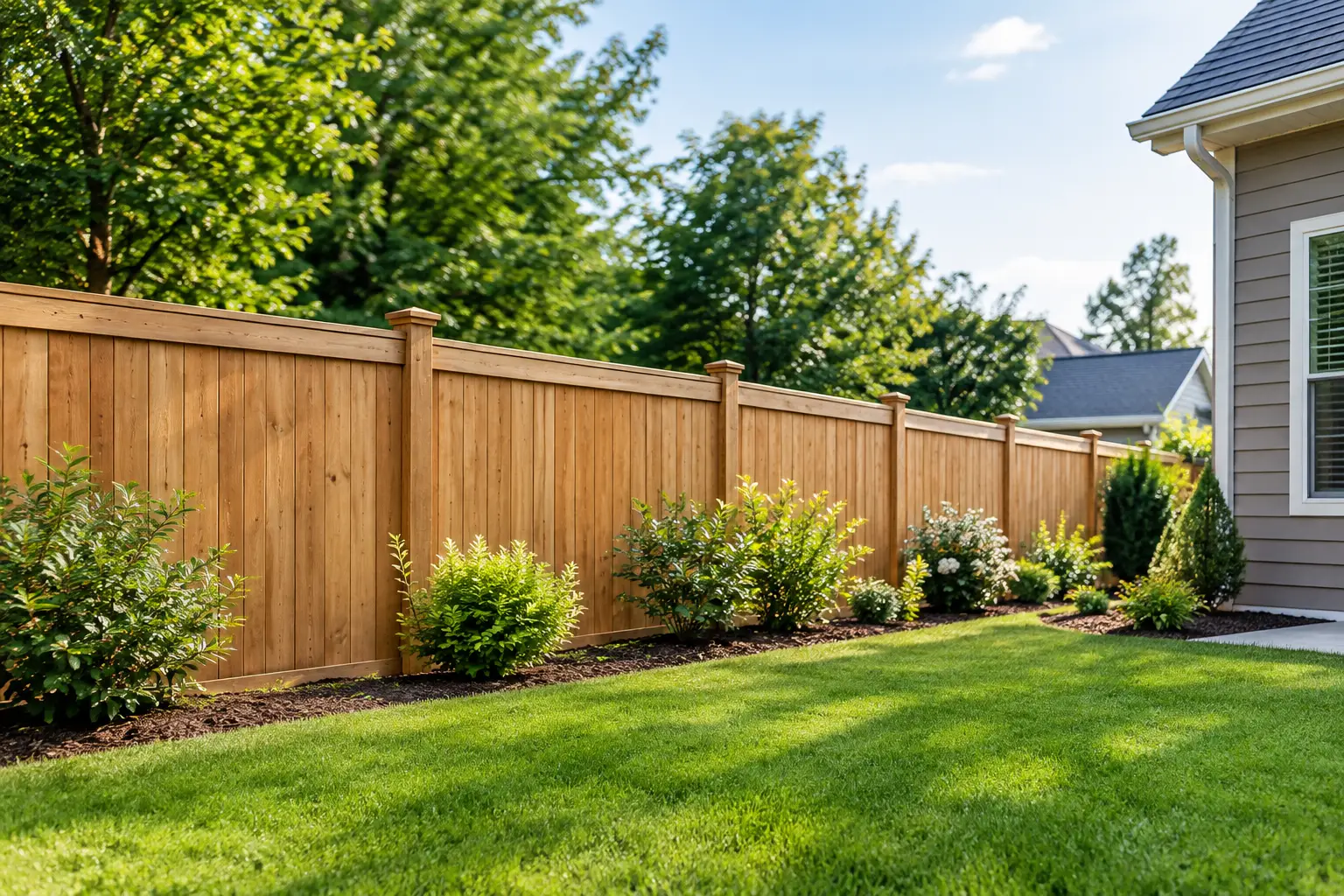
A backyard fence should do more than mark where your property ends. The best fence for backyard security helps create a clear, protected space for children, pets, outdoor equipment, and everyday family life. For Lynchburg-area homeowners, the right choice comes down to what you need the fence to prevent, how visible you want the yard to be, and how the material will perform on your specific property.
There is no single fence material that fits every security goal. A solid privacy fence may be the right answer for one household, while another needs a durable chain-link enclosure for a large dog or an aluminum fence that preserves a view. The most effective solution is a well-installed fence matched to the way you use your yard.
What Makes a Backyard Fence Secure?
Security starts with a barrier that is difficult to casually cross, climb, or damage. Height matters, but it is not the only factor. The fence layout, gate hardware, material strength, post installation, and condition of the ground along the fence line all affect how well the system works.
For most residential yards, a 6-foot fence provides a stronger sense of separation and a greater physical obstacle than a shorter decorative fence. A fence should also sit close enough to the ground to discourage pets from slipping underneath and to avoid obvious gaps along uneven terrain. On sloped Central Virginia properties, this often requires careful planning rather than a one-size-fits-all installation approach.
Gates deserve the same attention as the fence itself. A secure gate needs dependable hinges, a latch that closes properly, and posts strong enough to handle regular use. A quality fence can lose much of its value if the gate drags, will not latch, or leaves a wide opening at the bottom.
Wood Privacy Fencing for Strong Backyard Security
For homeowners who want both security and privacy, a wood privacy fence is often the leading choice. Solid wood pickets limit visibility into the yard, making it harder for passersby to see patio furniture, grills, play areas, and other belongings. It also creates a more secluded outdoor setting for families who spend time outside.
A properly built wood fence offers a substantial physical barrier. Tall, closely spaced pickets make climbing less convenient than open-style fencing, especially when the finished side and rail placement are planned with security in mind. Wood is also a practical choice for yards that need a custom layout around trees, grade changes, or existing landscaping.
The trade-off is maintenance. Wood can weather, warp, or develop damage over time if it is not cared for. Periodic staining or sealing, along with prompt repairs to loose pickets and aging posts, helps preserve the fence's strength and appearance. For homeowners who want a classic look and the most privacy from a standard residential fence, that upkeep is often worthwhile.
Is Vinyl the Best Fence for Backyard Security?
Vinyl privacy fencing is a strong option for homeowners who want a solid, clean-looking barrier with less routine maintenance than wood. Privacy vinyl panels block sightlines much like a wood privacy fence, which can help protect the feeling of a private backyard while defining a secure space for children and pets.
Vinyl does not require painting or staining, and it resists rot and insect damage. That can make it appealing for busy households that want a fence to continue looking finished without frequent maintenance. Its smooth surfaces can also be harder to climb than some horizontal rail configurations.
Still, vinyl is not automatically the best fence for backyard security in every situation. It needs professional installation with properly set posts and compatible components. A weak or poorly aligned gate can create problems regardless of how durable the panels are. Homeowners should also consider whether a solid white or tan privacy fence fits the character of their home, landscaping, and neighborhood.
Chain-Link Fencing for Practical Protection
Chain-link fencing is one of the most practical solutions when the main goal is containing pets, securing a yard perimeter, or creating a durable barrier without blocking the view. It is common for large backyards, active dogs, and properties where homeowners want to see beyond the fence line.
Because it is open, standard chain link does not provide privacy. It also does not discourage visibility into the yard the way a wood or vinyl privacy fence does. However, it remains a reliable security choice when installed at an appropriate height with a well-built gate. Its metal framework and interwoven mesh create a clear boundary that can handle regular use.
For added privacy, some homeowners consider privacy slats or landscaping around a chain-link fence. These options can soften the appearance and reduce visibility, but they do not create the same solid enclosure as a privacy fence. This is a good example of why the best material depends on whether privacy, pet containment, cost, or curb appeal is the primary concern.
Aluminum Fencing for Visibility and Pool Safety
Aluminum fencing is a good fit when homeowners need a defined, durable boundary but do not want to close off views of the yard. It is often selected around pools, landscaped areas, and homes where appearance is a high priority. Its narrow pickets and clean lines provide a more polished look than many utility-focused fence options.
From a security standpoint, aluminum fencing works best for controlled access and boundary definition. A properly latched gate helps keep children or pets from entering areas they should not access, particularly around a pool. The material resists rust and generally requires little upkeep, which makes it a dependable long-term choice.
The limitation is privacy. Aluminum fencing does not block views into the backyard, and its open design may not be the first choice for homeowners who want to screen outdoor activities or belongings. It can also be less suitable for a dog that is determined to climb or squeeze through an improperly selected picket spacing. When visibility and safety are more important than seclusion, aluminum is often the better fit.
Height, Gates, and Installation Matter as Much as Material
Choosing a material is only part of the decision. The best backyard security fence must be designed around the property. A fence that looks right on level ground may need adjustments for a sloped yard, drainage path, mature trees, retaining walls, or underground utilities.
Fence height should be selected with your security goals and local requirements in mind. Taller privacy fencing generally provides more separation, while pool and pet fencing may have specific practical needs related to access and spacing. Property lines and neighborhood rules should be reviewed before work begins so the fence is placed correctly from the start.
Professional installation is especially valuable for security-focused fencing because posts are the foundation of the entire system. Posts that are spaced, set, and aligned correctly help prevent leaning panels, sagging gates, and gaps that develop as the fence ages. Hardware should be selected for daily use, not treated as an afterthought.
Choosing the Right Fence for Your Yard
Start with the problem you want the fence to solve. If your main concern is blocking views and making the backyard feel private, wood or vinyl privacy fencing is usually the strongest direction. If you need dependable containment on a larger property and do not mind an open view, chain link may offer the most practical value. If you want low-maintenance boundary definition, pool-area protection, or an unobstructed view, aluminum may be the right choice.
It is also reasonable to have more than one goal. A family may want privacy from neighboring homes, a secure play area for children, and room for a dog to run. In that case, a solid 6-foot wood or vinyl fence with a dependable gate may make more sense than an open design. Another homeowner may prioritize a pool enclosure and preserve a wooded view, making aluminum the more suitable option.
A free on-site estimate gives homeowners the chance to discuss those priorities against the actual conditions of the property. Liberty Fence LLC can assess the layout, terrain, access points, and intended use of the yard to recommend a residential fence that fits the job rather than forcing the job to fit a standard design.
The right fence should make the backyard easier to enjoy, not harder to manage. When the material, height, gate, and installation are chosen with your household in mind, your fence becomes a dependable part of how your home works every day.