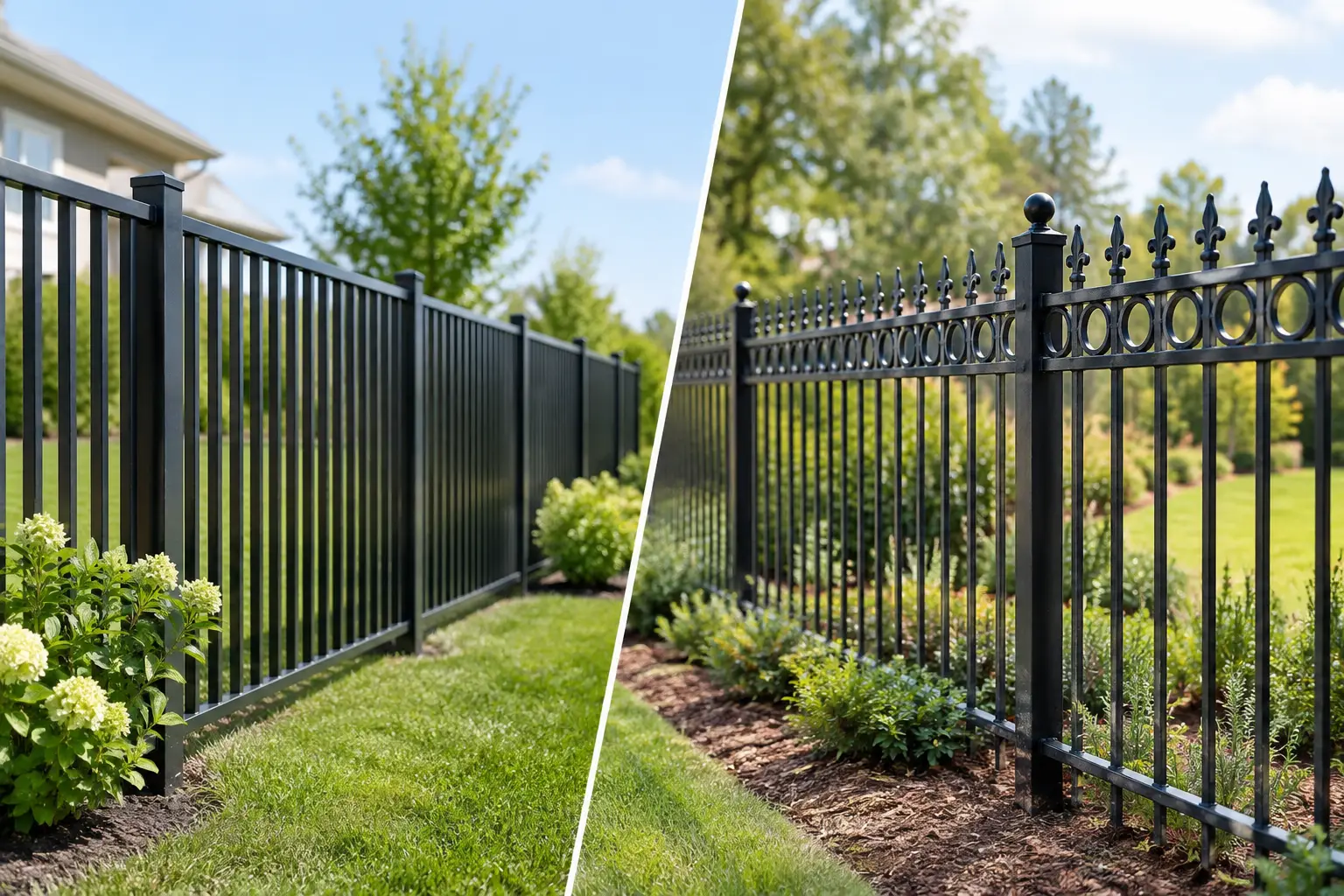
A black metal fence can make a Lynchburg yard feel more defined, more secure, and more polished without closing it off from the street or surrounding view. But homeowners comparing aluminum fence versus wrought iron quickly find that the two options look similar from a distance while performing very differently over time.
Both can work well around front yards, pool areas, gardens, and pet spaces. The better choice depends on what matters most at your property: low maintenance, a traditional appearance, added security, a specific budget, or the ability to work with sloped ground. Here is how to make the decision with clear expectations.
Aluminum Fence Versus Wrought Iron: The Main Difference
Aluminum fencing is a manufactured fence system made from lightweight aluminum rails and pickets, usually finished with a durable powder coating. It is designed to deliver the open, ornamental appearance homeowners often associate with iron while requiring far less upkeep.
Wrought iron is a heavy, forged metal material traditionally shaped by a metalworker. True wrought iron is less common in new residential projects today because it is labor-intensive and expensive. Many fences described as “wrought iron” are actually ornamental steel. They can have the same classic look, but steel still needs protection against corrosion.
For most residential properties, aluminum offers the visual style people want from an ornamental metal fence with fewer maintenance demands. Wrought iron or ornamental steel may be the better fit when a homeowner wants a substantial, custom-built fence and is prepared for the cost and care that come with it.
Appearance and Curb Appeal
Both materials create a clean, open boundary that does not block views. That makes them popular for front yards, landscaped areas, and properties where a solid privacy fence would feel too enclosed.
Wrought iron has a weight and detail that is hard to duplicate exactly. Decorative scrolls, finials, curved rails, and custom patterns can give an older home, historic property, or formal landscape a distinctive look. Its presence is part of the appeal.
Aluminum fencing has come a long way in style. Standard black aluminum remains the most common choice, but many systems include different picket tops, rail designs, heights, and gate options. It provides a crisp, classic appearance that suits traditional, colonial, ranch, and newer homes throughout Central Virginia.
The practical question is whether your project needs custom metalwork or a refined, consistent fence line. If you want the latter, aluminum often delivers the right look at a more manageable cost.
Maintenance and Rust Resistance
Maintenance is one of the clearest differences between aluminum and iron.
Aluminum does not rust. Its powder-coated finish can fade or become scratched after years of weather exposure, but the metal itself does not develop the orange corrosion that can weaken iron and steel. A homeowner can generally keep an aluminum fence looking good with occasional rinsing, mild soap, and prompt attention to any noticeable coating damage.
Wrought iron and ornamental steel require more active care. Moisture, humidity, wet leaves, irrigation spray, and chipped paint can create places where rust begins. Small rust spots should be sanded, treated, primed, and repainted before they spread. A fence that goes too long without maintenance may need more extensive repair or refinishing.
This matters in Central Virginia, where changing seasons bring rain, humidity, leaf buildup, and winter moisture. A well-maintained iron fence can last for many years, but it asks more of the homeowner. Aluminum is usually the better choice for someone who wants an attractive metal fence without adding regular repainting to the home maintenance list.
Strength, Security, and Everyday Use
Wrought iron is heavier and stronger than aluminum. A properly built iron fence can be an excellent option where appearance and physical deterrence are both priorities. Its weight, welded construction, and solid feel are valuable for certain high-security applications.
That does not mean aluminum fencing is fragile. Quality residential aluminum systems are strong enough for normal boundary definition, pool enclosure, child safety, and pet containment when the fence height, picket spacing, gates, and installation are planned correctly. Many aluminum panels are designed to rack, meaning they can follow the angle of a slope instead of leaving uneven gaps below the fence.
However, aluminum is not the best answer for every situation. A large dog that repeatedly charges a fence, a yard exposed to frequent impact, or a property needing a serious security barrier may call for a different material or design. Fence security depends on more than the metal itself. Height, gate hardware, post installation, access points, and the condition of the surrounding property all matter.
For dog containment, consider your pet’s size and behavior before selecting an open-picket fence. Small dogs may need tighter picket spacing. Dogs that can climb, squeeze through openings, or react strongly to activity outside the yard may be better served by a different fence style.
Cost: Upfront Price and Long-Term Value
Aluminum fencing is typically less expensive than true wrought iron, especially when comparing similar fence heights and lengths. It is lighter, easier to handle, and usually installed as a system of standardized panels, posts, and gates. Those factors can reduce labor and material costs.
Wrought iron costs more because the material is heavier and fabrication can be more specialized. Custom work, welded sections, detailed ornamentation, and challenging installation conditions can raise the project price further. Future maintenance should also be included in the long-term cost, not just the initial installation number.
Aluminum may provide better value for homeowners who want a long-lasting, low-maintenance ornamental fence. Wrought iron can be worth the investment when its authentic craftsmanship and custom appearance are central to the property’s design.
The most accurate comparison comes from looking at your actual yard. Fence length, height, number of gates, slopes, retaining walls, landscaping, existing fence removal, and access for installation can affect the final project cost more than a general price-per-foot estimate.
Pool Safety and Local Requirements
Both aluminum and wrought iron can be used for pool fencing, provided the finished system meets applicable safety requirements. An open metal fence is often a strong pool-area choice because it maintains visibility into the pool space while creating a clear physical barrier.
Before choosing a style, confirm the required height, maximum opening sizes, gate swing direction, self-closing hinges, self-latching hardware, and other local code requirements. A pool gate is not simply a decorative entry point. It is a critical safety feature that must operate reliably every day.
Aluminum is commonly selected for pool enclosures because it resists rust and does not block the view of the water. Wrought iron can also work, but its finish should be monitored closely around splash zones and damp landscaping.
Installation Makes the Difference
A fence is only as dependable as the posts, gates, layout, and installation behind it. Even a premium material can disappoint if the fence line ignores grade changes, gate locations, drainage paths, or the way your family actually uses the yard.
An on-site review helps identify practical details before work starts. For example, a gate may need to be wide enough for a mower, positioned away from a steep slope, or placed to create the simplest route from the driveway to the backyard. A fence around a garden may need to discourage deer, while a fence near a driveway may need to preserve visibility.
Aluminum’s lighter components can make it easier to install on uneven residential terrain, particularly with rackable panels. Wrought iron’s weight and custom construction can require more involved planning. Neither is automatically better on a slope, but the installation approach should fit the grade rather than forcing a straight, level design where it does not belong.
Which Fence Is Right for Your Home?
Choose aluminum fencing when you want an ornamental metal appearance, dependable durability, minimal maintenance, and a practical budget. It is especially well suited to pool areas, front-yard boundaries, gardens, and backyards where visibility matters.
Choose wrought iron when you want a heavier, more custom architectural statement and are comfortable investing in both the initial installation and ongoing finish maintenance. It can be a strong choice for distinctive properties where traditional craftsmanship is part of the goal.
For many homeowners, aluminum is the practical answer because it balances curb appeal, function, and low upkeep. Still, the right fence should be based on your yard, your household, and what you need the fence to do every day. A free on-site estimate from Liberty Fence LLC can turn those priorities into a clear plan for your Lynchburg-area property.