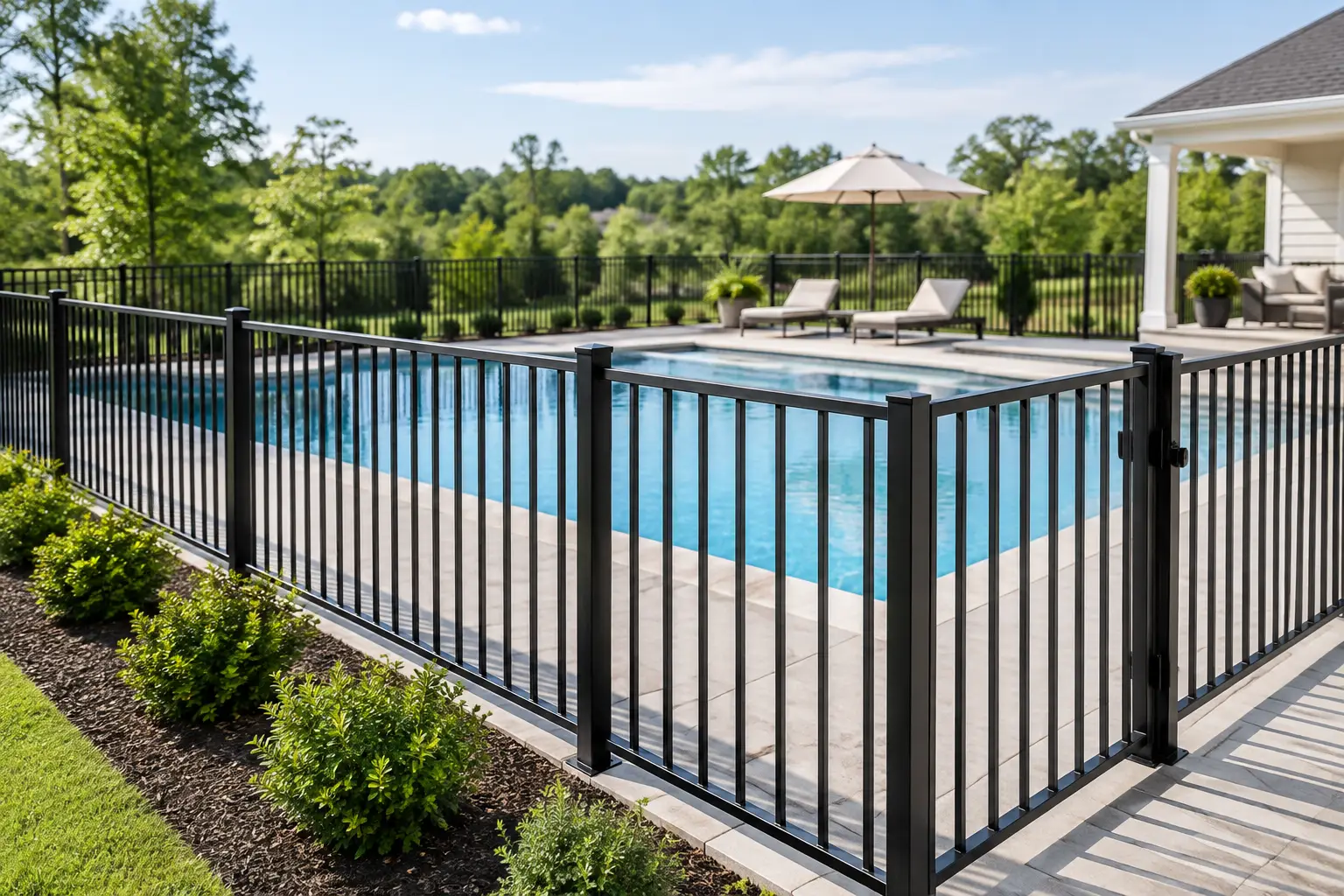
A pool changes the way a backyard needs to work. The area should feel open enough for family gatherings and summer afternoons, but it also needs a dependable safety barrier. An aluminum fence around pool areas gives Central Virginia homeowners a clean, low-maintenance way to define the space without blocking views of the water, patio, or yard.
For many properties, aluminum is a practical fit because it combines a traditional metal-fence appearance with a finish that holds up well through rain, heat, and changing seasons. Still, the right pool fence is about more than selecting a style. Fence height, gate placement, terrain, local requirements, and the relationship between the pool and the rest of the yard all deserve attention before installation begins.
Why Choose an Aluminum Fence Around a Pool?
Aluminum fencing is often selected for pool enclosures because it provides a clear physical boundary while keeping the backyard visually connected. Unlike a solid wood privacy fence, aluminum pickets allow homeowners to see into the pool area from the house, deck, or other parts of the yard. That visibility can be especially useful when children are swimming or playing nearby.
The material also requires less routine upkeep than many alternatives. Quality aluminum fencing is typically finished with a durable powder coating that resists rust, peeling, and fading. Homeowners generally do not need to stain or paint it every few years. Occasional cleaning with mild soap and water is usually enough to keep the fence looking cared for.
Appearance is another reason aluminum works well near a pool. Black is a popular choice because it tends to recede into the landscape rather than compete with the pool, hardscaping, or outdoor furniture. Bronze, white, and other colors may also suit the home and surrounding yard. The fence can feel formal, simple, or decorative depending on the rail and picket style selected.
There is a trade-off. Aluminum is not designed to create privacy the way vinyl or wood fencing can. If a pool sits close to neighboring homes or a busy street, homeowners may choose aluminum around the immediate pool area and add a privacy fence along the outer property line. This approach preserves sightlines at the pool while screening the areas where privacy matters most.
Start With Pool Safety and Local Requirements
Every pool project should begin with safety. Fence requirements can vary based on the type of pool, its location, the property, and applicable local rules. A barrier may need to meet specific standards for height, spacing between pickets, clearance at the bottom of the fence, gate operation, and access from the home or yard.
Do not assume a fence that looks like a pool fence will meet every applicable requirement. Before finalizing a design, verify the current requirements with the appropriate local permitting or code office. Homeowners associations may also have rules about fence height, color, placement, and approved materials.
The gate deserves the same attention as the fence itself. A pool gate should be positioned where access is convenient for adults but not casually accessible to children. Depending on local requirements and the selected system, gates may need self-closing hinges, self-latching hardware, and latches placed out of a young child’s reach. A properly installed gate should close and latch consistently, not require a hard pull, lift, or adjustment each time it is used.
A professional on-site review helps identify details that are easy to miss on a sketch. Steps, retaining walls, slopes, utility equipment, deck edges, and existing landscaping can all affect where the barrier should begin and end.
Plan the Fence Layout Before Choosing the Style
The most attractive aluminum fence around a pool is one that also makes everyday use of the backyard easier. Think first about how people will move through the space. A gate located near the house may make sense for family use, while another access point could be useful near a patio, storage area, or outdoor kitchen. On some properties, one well-placed gate is the safer and simpler choice.
Leave enough usable room inside the enclosure for pool maintenance, furniture, and walking around the water. A fence placed too close to the pool can make the area feel cramped and complicate access for service or cleaning. At the same time, setting the fence too far away may unnecessarily consume yard space or require a longer fence run.
Consider what should remain inside the pool enclosure. In some yards, the pool, deck, and a small seating area are enclosed together. In others, the fence separates only the pool itself from the rest of the backyard. The better choice depends on how the family uses the outdoor space and whether pets, young children, or visitors regularly move through the yard.
Sightlines matter as well. Aluminum fencing is valued for visibility, but landscaping can change that over time. Plan shrubs, ornamental grasses, and trees so they do not interfere with gate operation, crowd the fence, or create hidden areas near the pool. If privacy is desired, place screening plantings thoughtfully instead of allowing them to turn a visible pool enclosure into a concealed one.
Choose Height, Picket Spacing, and Gate Details Carefully
Pool fencing is not the place to choose dimensions based only on appearance. The height and spacing must work with applicable safety requirements, while the style should complement the home. Aluminum fence systems are available in several heights and grades, with choices that range from straightforward flat-top panels to more decorative options with finials or arched gates.
For most pool areas, a simple flat-top aluminum fence has a clean, dependable look. It works with brick homes, newer construction, traditional properties, and landscaped backyards without drawing unnecessary attention. Decorative details can add character, but they should not complicate maintenance or distract from the pool area.
Pay close attention to gaps and ground clearance, particularly on uneven terrain. A small low spot beneath a fence panel can create more clearance than expected. This is common in Central Virginia yards with slopes, drainage swales, or settled landscaping. Proper layout and installation are what keep a finished fence line looking even while addressing the realities of the ground.
Gate width is another practical decision. A standard walk gate may be enough for normal entry, but a wider gate can help when moving pool equipment, furniture, or landscaping materials. The best option depends on where access is needed and how often the opening will be used.
Account for Slopes, Decks, and Existing Fences
Few backyards are perfectly level. Aluminum fencing can be installed along gradual slopes using methods that keep the fence secure and visually consistent, but sharp elevation changes may require a more detailed plan. Fence panels may follow the grade or step down in sections depending on the slope, the system selected, and the required clearances.
Decks and concrete patios also need careful measurement. Fence posts may need to be installed beside the hardscape, mounted in an approved manner, or positioned to avoid drainage and expansion joints. The goal is not simply to fit a fence around the pool. It is to create an enclosure that works with the existing backyard rather than looking added on afterward.
If the yard already has a perimeter fence, consider whether the pool barrier should connect to it. This can reduce the amount of new fencing needed, but only if the existing fence is in good condition and suitable for the intended barrier design. An aging wood or chain-link fence may still serve a property boundary well without being the right component for a pool enclosure.
Installation Quality Makes a Difference
An aluminum fence is only as dependable as its layout, posts, gates, and hardware. Posts need to be set at the correct depth and aligned carefully so panels follow the planned line. Gates need proper support and adjustment from the beginning, especially when self-closing or self-latching hardware is involved.
Professional installation also helps prevent common problems such as panels that rack unevenly, gates that drag, posts that shift, or gaps that become noticeable after the project is complete. These details matter in any residential fence project, but they matter even more where the fence serves as a pool safety barrier.
At Liberty Fence LLC, a free on-site estimate gives Lynchburg-area homeowners an opportunity to discuss the pool layout, material preferences, access points, terrain, and existing features before committing to a plan. It is the practical first step toward a fence that fits the yard and the way the family uses it.
A well-planned pool fence should make the backyard feel more usable, not more restricted. When the layout, gate location, and aluminum style are chosen with care, the result is a clear boundary that supports safer pool time while preserving the open look homeowners want.